
Korean Drinking Culture - Soju Etiquette for First-Timers
Tap a heading to read that section.
You don't need to drink to enjoy Korea, and nobody will force a glass into your hand. But if you do end up at a table with soju bottles on it — at a work dinner, a group tour, or just out with new friends — a few unwritten rules make the difference between fitting in and standing out for the wrong reason.
The pouring rules
You don't pour your own drink. At a Korean table, pouring is something you do for the people around you, and they do it for you. If your glass is empty, someone will usually refill it; if you notice someone else's glass is low, that's your cue to pour for them. Topping off your own glass isn't forbidden exactly, but it reads as a little awkward, like you're not paying attention to the table.
Use two hands, or one hand with the other supporting your forearm, when pouring for or receiving from someone older or more senior — a boss, a professor, someone's parent. Among close friends of the same age, this loosens up considerably and a casual one-handed pour is fine. When in doubt (you don't know someone's age or status yet), default to two hands; it's never wrong, just occasionally more formal than strictly necessary.
Turn slightly away when drinking in front of someone senior. The classic version is angling your body away and covering your glass with your free hand as you drink, rather than facing them directly. This one is more old-fashioned and less universally observed than the pouring rules, but you'll still see it, especially at more traditional or formal gatherings.
"One shot" and pacing yourself
You'll hear "one shot" (원샷) called out as a toast — it means exactly what it sounds like, drink the whole glass at once rather than sipping. It's common at the start of a round, less so throughout the whole night. Nobody is tracking whether you comply every single time, and saying "I'm okay for now" or switching to a non-alcoholic drink mid-meal is completely normal and not considered rude. The social pressure to keep drinking is real at some Korean gatherings, especially work dinners, but it's also increasingly pushed back against, including by Koreans themselves — you're not obligated to match everyone else's pace.
Soju, beer, and "somaek"
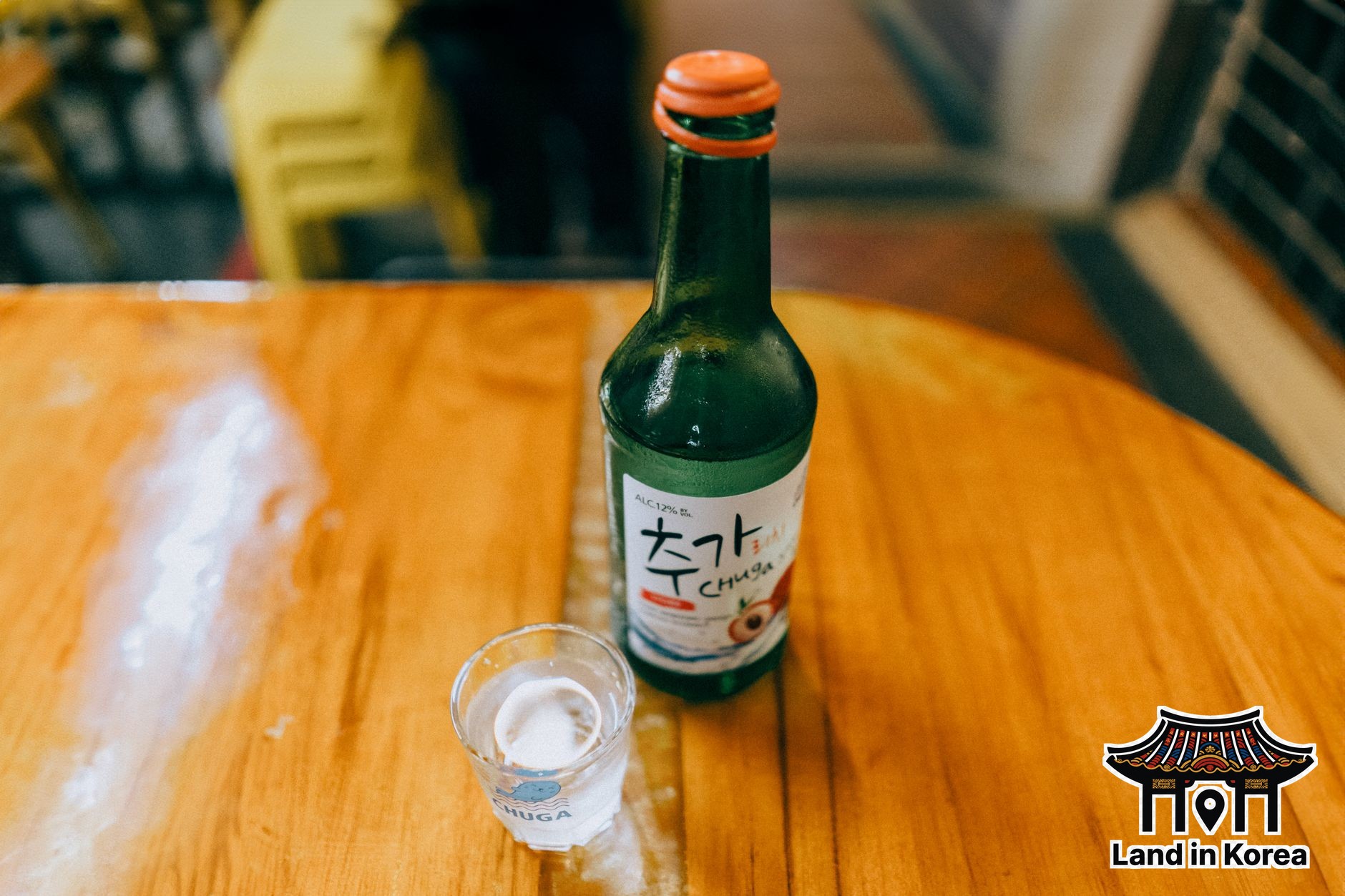
Soju typically comes in small green bottles, drunk from small shot-sized glasses rather than sipped like wine — the serving size is part of the pouring-for-each-other ritual, since a soju glass empties fast. Mixing soju with beer (somaek, 소맥) is extremely common and isn't seen as diluting either drink; servers and locals mix it tableside with a practiced pour, and it's worth trying at least once rather than defaulting to foreigner caution about it.
Rounds, and when the night actually ends
Korean nights out often move across multiple venues in sequence — dinner with drinks first (1차), then a second round somewhere else like a bar or another restaurant (2차), sometimes a third (3차) for noraebang (karaoke) or more drinks. You're not obligated to follow the group to every round; it's normal to bow out after the first or second and head home, and nobody will read that as rude if you say a clear goodbye rather than just disappearing.
A few practical notes
Tipping isn't expected at Korean bars or restaurants regardless of how much you drink — see our tipping and service charges guide for the full picture. And if you're close to Korea's legal drinking age, the calculation is less straightforward than you'd expect — our Korean age system guide explains why.
Frequently Asked Questions
Is it rude to refuse a drink entirely?
No. Saying you don't drink, or switching to a non-alcoholic option, is accepted without issue in most settings today. You may get asked once more out of politeness, but a clear "no, thank you" ends it.
Do I have to use two hands every time I pour?
Only really matters with someone clearly senior to you — an elder, a boss, someone you've just met in a formal context. Among peers and friends, a relaxed one-handed pour is completely normal.
What if I don't like soju?
Plenty of options exist at the same table — beer, makgeolli (rice wine), or ordering something else entirely. Nobody expects a foreign visitor to drink soju specifically, and asking what else is available is a completely normal question to a server.
Is it true Koreans drink a lot?
Korea does have a strong drinking-culture reputation, particularly around work dinners, but this varies enormously by generation, workplace, and individual — plenty of Koreans drink lightly or not at all, and that's increasingly common among younger people. Don't assume every gathering will be heavy drinking.
Official sources
The pouring, toasting and round-drinking customs above describe commonly observed Korean social etiquette rather than a single official standard, and individual practice varies by region, generation and setting — treat this as a general guide, not a strict rulebook. The legal drinking age mechanics are drawn from The Korea Times' coverage of Korea's 2023 age-system reform, accessed 2026-11-12, covered in full in our Korean age system guide.