
Gyeongbokgung Palace Guide: Hours, Tickets, and Tips
The detail that catches almost everyone off guard
Most first-timers plan their Seoul itinerary around Gyeongbokgung without checking one thing: the palace is closed every Tuesday. If a Tuesday falls on a public holiday, it stays open and the closure shifts to the next non-holiday day instead. It's a small detail, but it derails more first-day plans than anything else on this list.
A palace that's been rebuilt more than once
Gyeongbokgung was built in 1395 as the primary royal palace of the newly founded Joseon dynasty — the name means "Palace Greatly Blessed by Heaven." It didn't survive intact: the palace was burned during the Japanese invasions of the 1590s and left in ruins for roughly 270 years before King Gojong's father, the Regent Heungseon Daewongun, ordered its full reconstruction in the 1860s. Much of what you see standing today reflects that 19th-century rebuild rather than the 14th-century original, and restoration work on outer buildings damaged during the 20th century has continued for decades — a reminder that visiting today is walking through a site that's still actively being pieced back together.
It's not just a photo backdrop
Gyeongbokgung is Seoul's largest and most significant palace, and the grounds also hold the National Folk Museum of Korea, included in your visit at no extra cost. A useful way to think about the layout: you enter through the main gate, Gwanghwamun, cross a courtyard to the inner gate, Heungnyemun (where the guard ceremony happens), and reach Geunjeongjeon — the throne hall, and one of the largest wooden structures of its kind in Korea. Behind it, Gyeonghoeru Pavilion sits over an artificial pond and was used for state banquets; it's the building pictured on the 10,000 won bill, so it tends to draw a crowd once people recognize it. Further back, the smaller Hyangwonjeong pavilion sits on its own pond and is one of the most photographed corners of the whole complex. Budget more time than a quick walk-through — between the throne hall, the pavilions, and the museum, a rushed 20-minute stop misses most of it; two to three hours is more realistic if you actually want to see the back half of the grounds.
The free ceremony most people miss
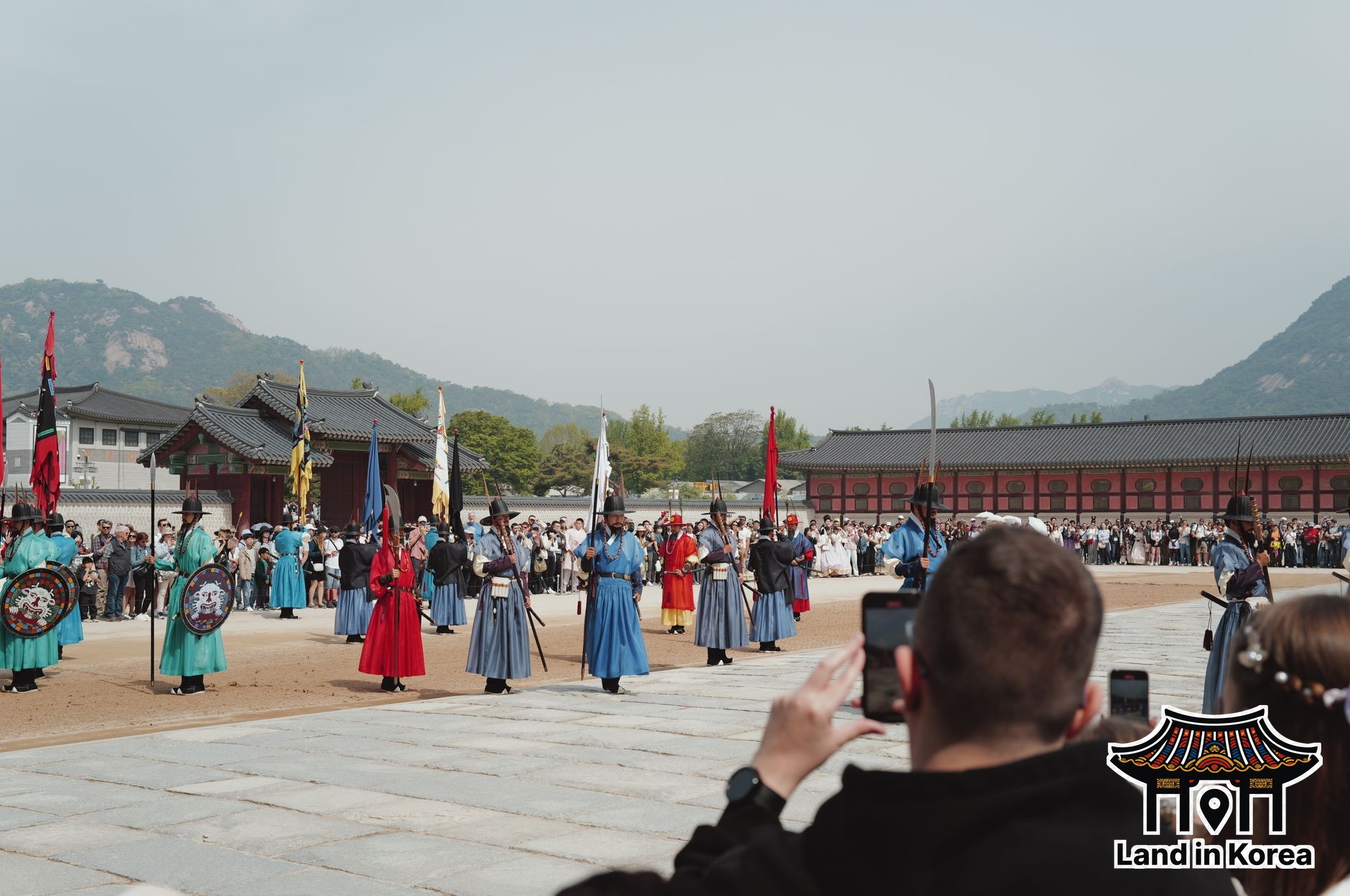
The Royal Guard Changing Ceremony runs at the Heungnyemun Gate at set times, not continuously — currently around 10:00 and 14:00, with a shorter guard dispatch ceremony at 11:00 and 13:00. Showing up between those windows means missing it entirely, so check the schedule before you plan your visit around it. It's held daily except palace closure days, and it's completely free to watch. Arriving 10-15 minutes early gets you a spot near the front without having to push through a crowd that's already gathered.
The hanbok trick that actually works
Wearing a complete hanbok that meets the palace's official guidelines gets you free admission — one of the few tourist perks in Seoul that's both genuinely useful and easy to use, since hanbok rental shops cluster right outside the palace gates, mainly along the street leading up to Gwanghwamun. It also makes for noticeably better photos than street clothes against the traditional architecture. Just note that a rental shop's promise isn't the same as the palace's actual guidelines, so a genuine hanbok (not just any traditional-looking outfit) is what qualifies — and most rentals run for a half-day or full-day block, so plan the palace visit and any nearby photo stops (Bukchon, for example) inside that rental window rather than cutting it close. Taking off shoes indoors at certain areas is expected, so review Korean etiquette basics if you're unfamiliar with temple or palace customs.
Getting there and timing your visit
Gyeongbokgung Station on subway Line 3 has an exit that leads almost directly to the palace grounds, which makes it one of the easier major sights in Seoul to reach without a taxi. If avoiding crowds matters more to you than sleeping in, arriving right at opening is the single biggest lever — large tour groups tend to arrive from mid-morning onward, and by early afternoon the throne hall courtyard and the approach to Gwanghwamun can get genuinely packed, especially on weekends and during cherry blossom season in spring.
Combine tickets if you're visiting more than one palace
If Gyeongbokgung is only one stop on a multi-palace day (Seoul has several, including Changdeokgung and Deoksugung), it's worth checking whether an integrated multi-palace ticket is available before buying single admission at each gate separately — Seoul has historically offered a combined ticket covering multiple royal palaces and the Jongmyo Shrine at a lower total cost than paying individually, though the exact price and which sites are included can change, so confirm current terms at the ticket booth or official tourism site before you buy.
Pair it with Bukchon
Bukchon Hanok Village sits within walking distance, making it a natural add-on after the palace rather than a separate trip. Most visitors do both in one afternoon, and if your hanbok rental is still running, the traditional houses in Bukchon make for a second round of photos before you have to return the outfit.
The short version
- Closed Tuesdays (unless it's a holiday)
- Guard ceremony runs on a schedule (currently ~10:00 and 14:00) — not continuous
- A full hanbok gets you in free
- Budget two to three hours, not 20 minutes — it's Seoul's largest palace with a museum on-site
- Arrive at opening if you want to avoid tour-group crowds
- Bukchon Hanok Village is a short walk away
- Ask about a multi-palace combined ticket if you're seeing more than one site
Official sources
This guide is checked against Korea Tourism Organization. Prices, hours, and procedures change — confirm time-sensitive details there before you rely on them.
Frequently Asked Questions
What day is Gyeongbokgung Palace closed?
Tuesdays — unless that Tuesday is a public holiday, in which case it stays open and the closure shifts to the next non-holiday day.
How do I get free admission to Gyeongbokgung?
Wear a complete hanbok that meets the palace's official guidelines — rental shops cluster right outside the gates, mostly along the approach to Gwanghwamun.
When does the royal guard-changing ceremony happen?
At set times, currently around 10:00 and 14:00, with a shorter guard dispatch ceremony at 11:00 and 13:00 — it doesn't run continuously, so arriving 10-15 minutes early is worth it.
How much time should I plan for a Gyeongbokgung visit?
More than the 20 minutes most first-timers budget. Between the throne hall, the pavilions further back on the grounds, and the National Folk Museum included in admission, two to three hours is realistic if you want to see more than the front courtyard.
Is it worth buying a multi-palace ticket instead of single admission?
If you're planning to see more than one of Seoul's royal palaces (or Jongmyo Shrine) during your trip, it's worth asking at the ticket booth whether a combined ticket is available — it has historically worked out cheaper than paying full price at each site individually.