
Jeju Island - What First-Timers Actually Need to Know
No trains, no KTX
Mainland Korea's rail network is one of its biggest conveniences for travelers, which is exactly why Jeju surprises so many first-timers: the island isn't reachable by train at all. Getting there means a flight or a long ferry from the mainland — there's no KTX extension across the water.
A UNESCO triple designation, not just a beach island
Jeju carries a rare combination of UNESCO recognitions — it's listed as a World Natural Heritage site for its volcanic landscape and lava tubes, and separately recognized as both a Biosphere Reserve and a Global Geopark. On top of the natural designations, Jeju's haenyeo — the island's tradition of women free-divers who harvest seafood by breath-hold diving without oxygen tanks, a practice going back generations — is recognized as UNESCO Intangible Cultural Heritage. It's worth knowing this going in, because it reframes Jeju from "Korea's beach island" into a place with genuinely distinct geology and culture, not just a tropical-adjacent add-on to a Seoul trip.
What makes it different from the mainland
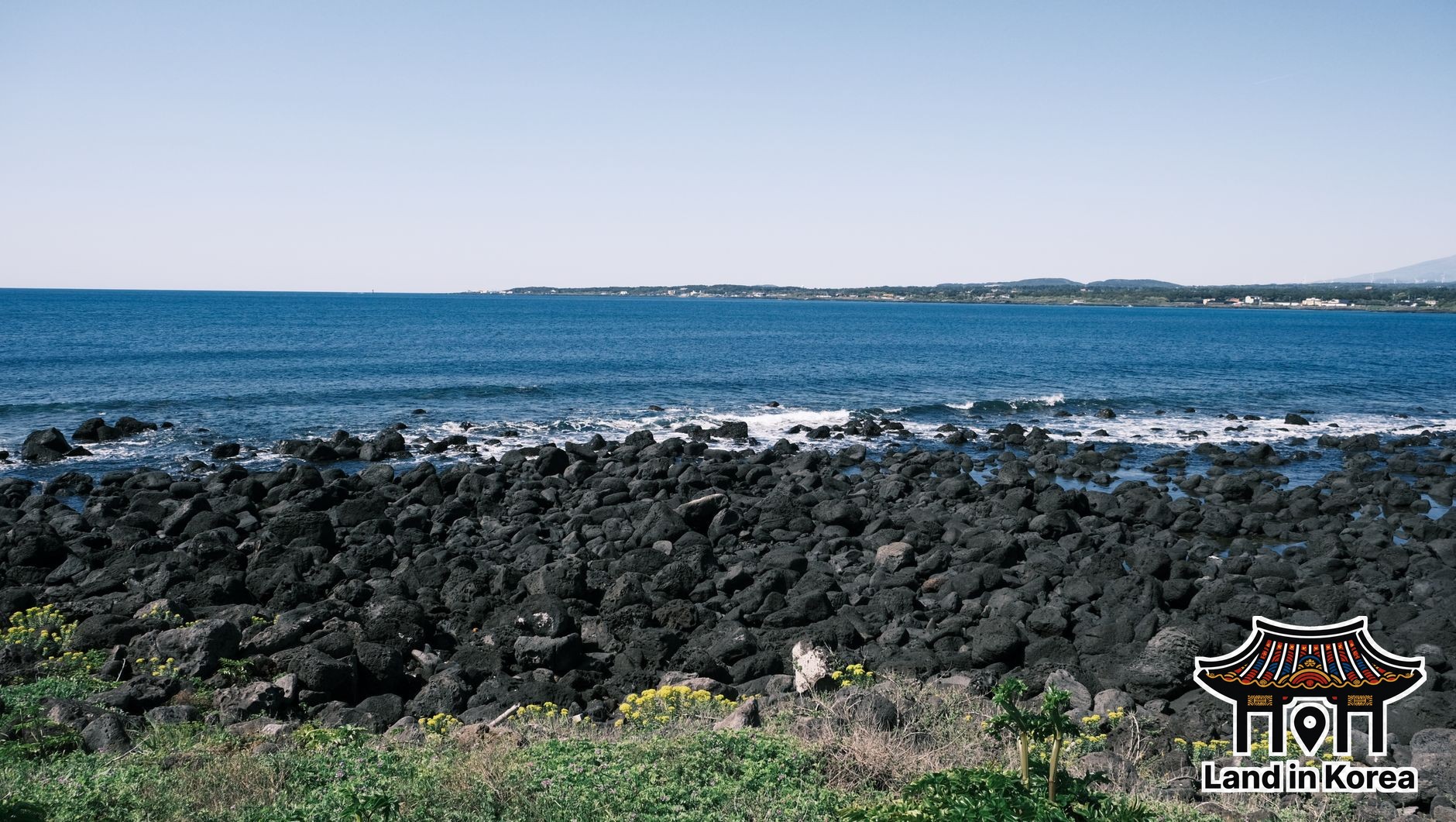
Jeju is a volcanic island centered on Hallasan, South Korea's tallest mountain at just under 2,000 meters, with a crater lake, Baengnokdam, at the summit. It's climbable as a long day trip for visitors with the time and fitness for it, but it's a real hike, not a stroll — several trails of different lengths lead up, and park authorities set cutoff times for starting certain trails in the afternoon specifically so hikers aren't still descending after dark, so checking the current entry cutoff before you set out matters more here than on a casual walk. The island also has black sand beaches (from its volcanic rock) and a local dialect distinct enough that some words differ noticeably from standard Korean.
Regions worth knowing before you plan
Jeju is bigger than a single day trip can cover, and which side you base yourself on changes what's easily reachable. Jeju City, on the north coast, is where the airport is and the island's main urban hub. Seogwipo, on the south coast, is quieter and closer to some of the island's best-known waterfalls, including Jeongbang and Cheonjiyeon. Seongsan Ilchulbong ("Sunrise Peak"), a UNESCO-listed volcanic tuff cone on the east coast, is a popular sunrise hike and one of the most recognizable single images of Jeju. Udo, a small island just off the east coast, needs its own short additional ferry to reach and is known for coastal cycling routes and peanut-flavored ice cream — a worthwhile half-day add-on if Seongsan is already on your route.
Rent a car — seriously
Public transit exists on Jeju, but bus routes are noticeably sparser than in Seoul or Busan, and the real distances between sights tend to be longer than they look on a map. A rental car matters more here than almost anywhere else in Korea; it's less a convenience than the practical way most visitors actually get around. Foreign visitors need an International Driving Permit alongside their home license to rent and drive legally in Korea — check this before you arrive, since it isn't something you can arrange on the island itself. Korea drives on the right side of the road with the steering wheel on the left, which matters if you're used to left-hand traffic. The coastal Round-the-Island Road (Route 1132) is the scenic way to link many of the island's sights together if you're not in a hurry.
Pack for changeable coastal weather
Weather on Jeju's coast shifts quickly, even in summer. A packable rain layer is worth including regardless of season — the forecast in the morning doesn't always hold by afternoon. Typhoon season, roughly August into September, can disrupt both flights and ferries with little notice, so building a buffer day into a late-summer Jeju trip is a reasonable precaution rather than overcaution. On the other end, spring brings canola flower fields into bloom and some of Korea's earliest cherry blossoms thanks to the island's milder climate, while autumn brings pink muhly grass fields that have become a popular photo destination in their own right.
Getting there
Flights between Jeju and Gimpo airport (and several other major domestic airports) are frequent and short — around an hour in the air — and this route is consistently one of the busiest domestic air corridors in the world, so seats are rarely the bottleneck, though peak holiday weekends still sell out ahead. Ferries run from several mainland ports, including Wando, Mokpo, and Busan; they take considerably longer than flying, often run overnight, and are mainly worth it if you want to bring your own vehicle across rather than rent one on the island.
The short version
- No train or KTX access — only flight or ferry
- UNESCO World Natural Heritage, Biosphere Reserve, and Global Geopark, plus UNESCO-recognized haenyeo diving culture
- Home to Hallasan, Korea's tallest mountain, with an afternoon hiking cutoff for safety
- Jeju City, Seogwipo, Seongsan Ilchulbong, and Udo each offer a different side of the island
- Renting a car (with an International Driving Permit) is the practical way to get around
- Coastal weather changes fast — pack a rain layer even in summer, and watch for typhoon season in late summer
Official sources
This guide is checked against Korea Tourism Organization. Prices, hours, and procedures change — confirm time-sensitive details there before you rely on them.
Frequently Asked Questions
Can I take a train to Jeju Island?
No — Jeju has no train or KTX access at all. You can only get there by flight or a long ferry from the mainland.
Do I need to rent a car on Jeju?
Yes, it's genuinely the practical option — bus routes are sparser than in Seoul or Busan and real distances are longer than they look on a map. You'll need an International Driving Permit alongside your home license.
What is Jeju Island known for?
Hallasan, South Korea's tallest mountain, plus black sand beaches, a local dialect distinct enough that some words differ from standard Korean, and UNESCO recognition for both its volcanic landscape and its haenyeo free-diving culture.
Is Jeju worth visiting as a day trip from Seoul?
It's possible given how frequent and short the flights are, but it undersells the island — Jeju City, Seogwipo, Seongsan Ilchulbong, and Udo each offer enough to fill a day on their own, so most visitors do better with at least two or three days.
When is typhoon season on Jeju?
Roughly August into September — it can disrupt flights and ferries with little notice, so it's worth building a buffer day into a trip planned for that window.