
Korea Seasonal Packing and Weather Tips: Full Guide
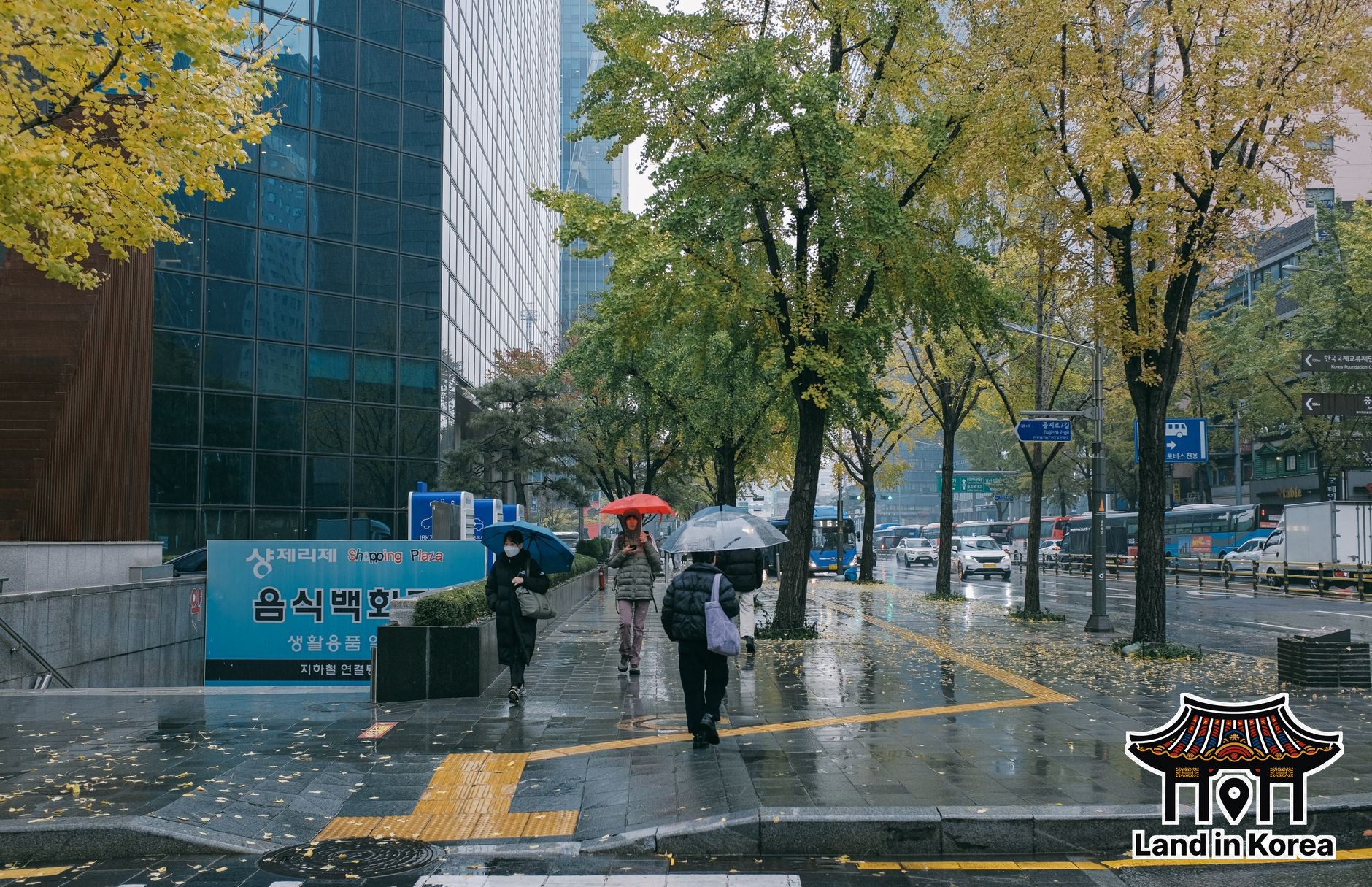
The detail that wrecks most packing lists
The season that looks easiest to pack for in Korea is usually the one that catches the most travelers off guard. It's rarely the outdoor temperature that trips people up — it's the gap between that and what's happening indoors. Korean buildings, subways, and buses run heating and AC hard, so the swing you feel in a day is bigger than the forecast suggests: a freezing winter street followed by an overheated subway car, or a humid sidewalk followed by an AC-blasted café. Pack for both environments, not just the one outside your window.
Spring (March–May): mild, but check the dust forecast
Spring is comfortable for walking-heavy itineraries, and it's when cherry blossoms bloom — starting around late March in the south (Jeju, then Busan) and reaching Seoul in early April, with full bloom lasting only a week to ten days. That short window means popular blossom spots get crowded fast, so check a bloom forecast before locking in dates. The less charming part is fine dust and "yellow dust" — sand blown in from China and Mongolia — peaking between March and May with genuinely bad air quality days. A KF94-rated mask (Korea's standard for filtering fine particles) is worth packing or buying at any pharmacy or convenience store; a cloth or surgical mask does little against it.
Summer (June–August): monsoon first, heat after
Korea's rainy season, locally called jangma, isn't scattered showers — it's a sustained wet spell tied to a seasonal rain front, typically running from late June into late July, with Jeju's window starting earliest and Seoul's running slightly later. During jangma, a compact umbrella beats a rain jacket for the volume of rain, and quick-dry fabric beats cotton, which stays damp in the humidity. Once the front clears, late July and August turn hot and heavily humid rather than rainy — breathable, light clothing matters more than anything water-resistant. Convenience stores sell cheap umbrellas everywhere, worth knowing before you overpack for rain.
Fall (September–November): the easiest season, also the most popular
Fall is the other strong contender for comfortable daytime walking weather, and it's when Korea's foliage turns — starting in the northern mountains and higher elevations, then moving south and downhill, with Seoul and the surrounding lowlands typically peaking late October into early November. That progression means the "best" week depends on where you're headed, so check a foliage forecast the same way you would a cherry blossom one. Evenings cool off faster than daytime suggests, so a light jacket for after dark earns its space even if the afternoon feels mild.
Winter (December–February): dry cold, real snow outside Seoul
Winter is cold and notably dry rather than damp, so wind chill matters more than raw temperature. Snow is heavier and more frequent outside the capital, particularly along the east coast and in mountain regions, so a trip built around Gangwon-do or ski resorts needs real winter gear, not just a city coat. Layering matters more than one heavy coat, since indoor spaces (especially anywhere with underfloor "ondol" heating) run warm enough that you'll shed layers fast once inside. To actually warm up between sightseeing stretches, a jjimjilbang visit beats another coffee shop.
Why layering beats a single "right" jacket
Because indoor climate control runs strong both ways, the coat that's right for a winter street is too much the second you step into an overheated subway car, and a light summer top can feel cold under aggressive café AC. A layer you can add or remove, rather than one heavy or one light item, handles both without carrying a separate indoor outfit.
What to actually check before you pack
Skip a generic "Korea in month]" article and check the Korea Meteorological Administration's short-term forecast or a reliable weather app closer to your trip — jangma timing and dust advisories shift year to year rather than falling on fixed dates. Mobile data lined up before you land (an [eSIM is the easiest way) lets you check daily air quality and rain forecasts instead of relying on what you packed for. Comfortable walking shoes matter more than fashion, since Korean cities involve a lot of walking and stairs — subway transfers especially.
The short version
- Layer for indoor heating/AC swings, not just the outdoor forecast
- Spring: mild, but check the yellow/fine dust forecast (March–May) and pack a KF94 mask
- Summer: jangma monsoon runs roughly late June–late July — umbrella and quick-dry fabric over a rain jacket
- Late summer: hot and humid rather than rainy — prioritize breathable clothing
- Fall: comfortable, foliage peaks north-to-south, Seoul-area typically late Oct–early Nov
- Winter: dry cold with real snow outside Seoul (east coast, mountains) — layers beat one heavy coat
- Check the KMA forecast or a weather app close to your trip date, not a generic monthly guide
- Comfortable walking shoes matter more than fashion in every season
Official sources
This guide is checked against Korea Meteorological Administration. Prices, hours, and procedures change — confirm time-sensitive details there before you rely on them.
Frequently Asked Questions
What's the rainy season (jangma) like in Korea, and when does it happen?
A sustained multi-week rainy spell rather than scattered showers, generally running from late June into late July, shifting slightly earlier in the south (Jeju) and later in central Korea (Seoul). A compact umbrella and quick-dry fabric beat a rain jacket and cotton.
Is yellow dust/fine dust actually something I need to worry about as a tourist?
Yes, during spring (roughly March–May), when yellow dust from China and Mongolia combines with local fine dust for genuinely poor air quality days. A KF94-rated mask, sold at any pharmacy or convenience store, filters it far better than a cloth or surgical mask.
When do cherry blossoms bloom in Korea?
Starting in the south around late March and reaching Seoul in early April, but full bloom only lasts about a week to ten days in any one spot, so check a current bloom forecast rather than picking a date a month out.
When is fall foliage at its best in Seoul?
Typically late October into early November, though colors turn earlier in the northern mountains and higher elevations before moving south and downhill to the city.
How cold does Korean winter get, and do I need a heavy coat?
Cold and dry, with wind chill mattering more than the raw temperature, and snowier outside Seoul — especially the east coast and mountains. Layering beats one heavy coat, since indoor heating runs strong enough that you'll shed layers fast once inside.
Why does everyone say to layer instead of just picking the right jacket?
Because Korean indoor spaces run heating and AC hard both ways — a coat that's right outside in winter is too warm indoors, and light summer clothing can feel cold under strong AC. Removable layers handle both without a second outfit.