
Seongsan Ilchulbong: Jeju's UNESCO Sunrise Peak Guide
Tap a heading to read that section.
It used to be a separate island
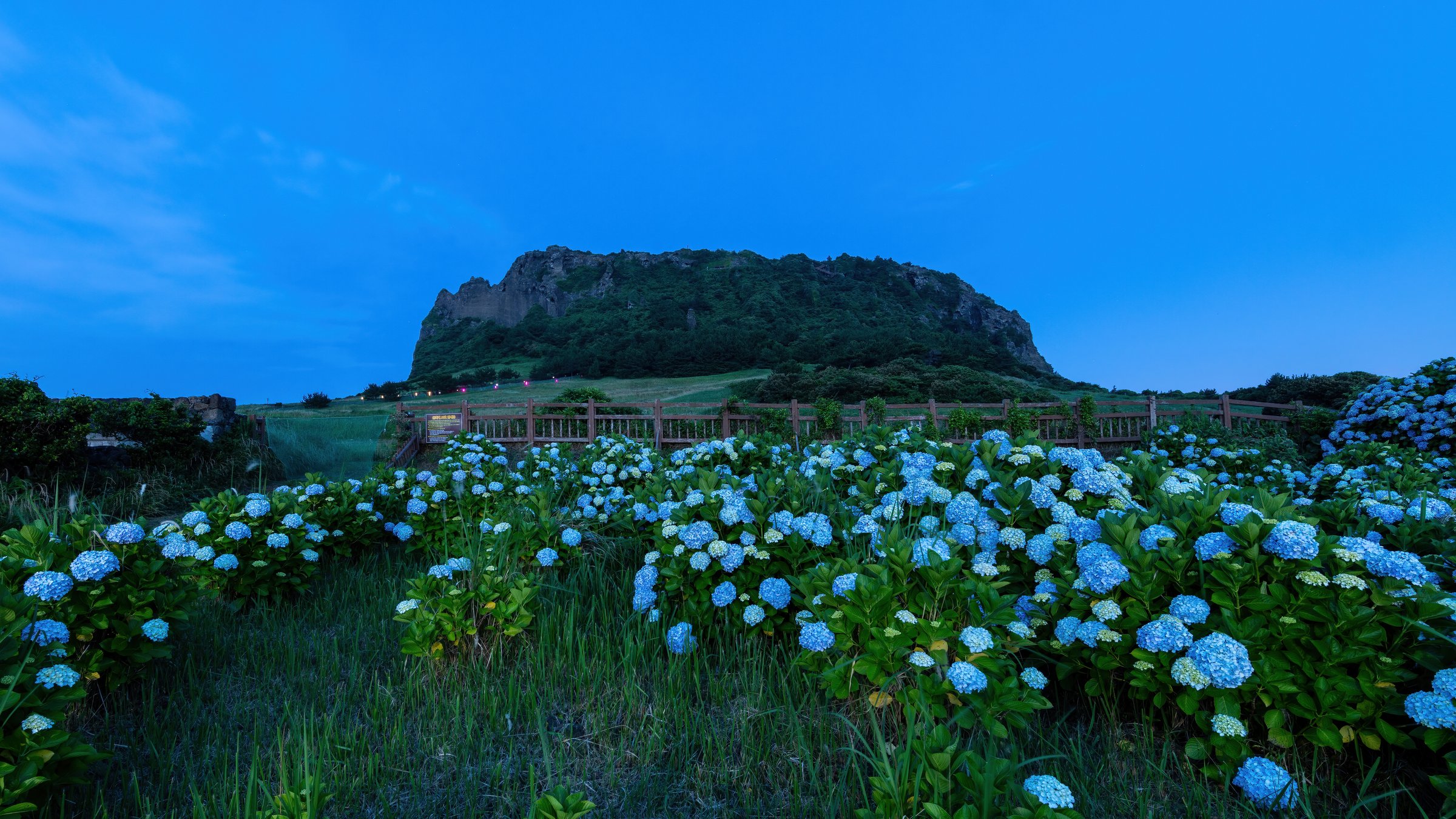
"Ilchulbong" means "sunrise peak," and the name describes what most visitors come for, but the geology is the more surprising part. Seongsan Ilchulbong formed from a Surtseyan-type eruption — magma meeting shallow seawater in a violent, steam-driven explosion — on what was originally its own small island off Jeju's east coast. Over time, sediment carried by currents built up a connecting strip of land (a tombolo) between the cone and the main island, which is why it now reads as a headland rather than the separate islet it originally was. A 2024 peer-reviewed study on Jeju's geoheritage dates the formation to roughly 6,700 years ago, among the youngest major landforms on an island already defined by its volcanic history.
Part of a three-site UNESCO listing, not a standalone one
Seongsan Ilchulbong is one of three components making up "Jeju Volcanic Island and Lava Tubes," inscribed as a UNESCO World Natural Heritage Site on July 2, 2007 — the other two are the Hallasan Natural Reserve (Korea's tallest mountain, covered in our Jeju Island overview) and the Geomunoreum lava tube system, which UNESCO's own documentation describes as among the finest lava tube cave systems anywhere. Seongsan Ilchulbong's own protected core zone covers roughly 52 hectares. On top of the 2007 UNESCO inscription, it was separately recognized as part of the UNESCO Global Geopark Network in October 2010, and South Korea had already designated it a national Natural Monument back in 2000 — so by the time UNESCO got involved, the site already had two layers of domestic protection in place.
The climb is short, but don't underestimate it
A wooden deck staircase leads from the entrance to the crater rim, and most visitors reach the top in well under 30 minutes. It's not technically difficult — no scrambling, no exposed sections — but it is a continuous uphill climb with no shade for most of the route, and the summit area is often windy enough that a light jacket is worth carrying even in warmer months. The crater itself isn't a lava-filled bowl; it's a wide, grass-covered depression roughly 600 meters across, ringed by jagged volcanic rock that locals have long described as resembling a crown — a detail that shows up in most Korean-language descriptions of the peak.
Sunrise draws a real crowd — know before you go
The peak opens roughly an hour before sunrise year-round specifically so visitors can climb it for the view, and closing time shifts seasonally (later in the evening from spring through autumn, earlier in winter) — check the current schedule before planning around either end of the day, since published hours vary by source and season. Several travel guides also note the site closes on the first Monday of each month; treat that as worth confirming locally rather than fixed fact, since this is exactly the kind of recurring-closure detail that's easy for a source to get stale. The island sees its single busiest sunrise crowd on New Year's Eve into New Year's Day, when the long-running Seongsan Sunrise Festival (held annually since 1994) draws visitors who stay up through the night — if you're there for that specifically, dress for genuinely cold, windy conditions at the summit.
Admission is modest — and the lower coastal path is free
Most current listings put adult admission at around 5,000 won, with youth and children around half that, though this isn't confirmed on an official government page as of this writing, so treat it as a planning estimate rather than a locked-in number. Only the summit staircase and crater rim are ticketed; the lower coastal walking path around the base is free to walk regardless of whether you climb.
The haenyeo connection
Our Jeju Island overview already covers haenyeo — the island's tradition of women free-divers who harvest seafood by breath-hold diving — as part of Jeju's UNESCO Intangible Cultural Heritage recognition. Seongsan is one of the places that tradition is still visible in person: a free diving demonstration runs near the site, reportedly around early-to-mid afternoon in two short sessions, though exact timing varies by source and season, so confirm locally rather than planning your whole visit around a specific hour.
Getting there
As on the rest of Jeju, a rental car is the practical default — our Jeju Island overview covers why bus routes run sparser here than on the mainland, and Seongsan, on the island's eastern edge, is a real drive from Jeju City or the airport, not a quick hop. If you're relying on public buses, routes do connect Jeju City and Seogwipo along the east coast past Seongsan, but trip times run well over an hour and schedules are worth checking same-day through the Jeju Bus app or a live-arrival service rather than an older blog post. One genuinely useful update: as of October 2024, Jeju's city buses stopped accepting cash fares entirely, so bring a T-money or Cashbee card (see our T-money guide) regardless of how you plan the rest of the trip.
The short version
- Formed underwater roughly 6,700 years ago and was originally a separate islet before sediment connected it to Jeju
- Part of the three-site "Jeju Volcanic Island and Lava Tubes" UNESCO listing (with Hallasan and the Geomunoreum lava tubes), inscribed 2007
- Also a UNESCO Global Geopark site (2010) and a Korean national Natural Monument since 2000
- The climb to the crater rim takes under 30 minutes on a wooden staircase — no technical difficulty, but exposed and often windy
- Opens about an hour before sunrise year-round; closing time and monthly closure days vary, so confirm current hours
- Admission is roughly 5,000 won for adults (unconfirmed officially) — the lower coastal path is free
- A free haenyeo diving demonstration runs nearby, typically early-to-mid afternoon
- Jeju's city buses have been cash-free since October 2024 — bring a T-money or Cashbee card
Official sources
This guide is checked against Korea Tourism Organization and UNESCO's World Heritage listing for Jeju Volcanic Island and Lava Tubes. Prices, hours, and procedures change — confirm time-sensitive details there before you rely on them.
Frequently Asked Questions
Is Seongsan Ilchulbong a UNESCO World Heritage Site?
Yes — it's one of three components of "Jeju Volcanic Island and Lava Tubes," inscribed in 2007, alongside the Hallasan Natural Reserve and the Geomunoreum lava tube system.
How long does it take to climb Seongsan Ilchulbong?
Most visitors reach the crater rim in under 30 minutes via a wooden deck staircase. It's not technically difficult, but it's a continuous uphill climb with little shade.
How much does it cost to visit Seongsan Ilchulbong?
Most current listings put adult admission around 5,000 won, with discounted rates for youth and children, though this isn't confirmed on an official government page — the lower coastal path around the base is free regardless.
Was Seongsan Ilchulbong always connected to Jeju Island?
No. It originally formed as a separate small island off Jeju's east coast and was later connected to the mainland by a build-up of sediment, forming the land bridge visitors cross today.
What time does Seongsan Ilchulbong open for sunrise?
Roughly an hour before sunrise, year-round, so early risers can reach the rim for first light — but confirm the current seasonal closing time and any monthly closure day before you plan around it.
A few details. A better trip.
Compare eSIM reference prices, explore arrival airports and choose a neighbourhood. Check current offers on each provider’s website.