
Seoul Day Trips by Regular Train and Subway Instead of KTX
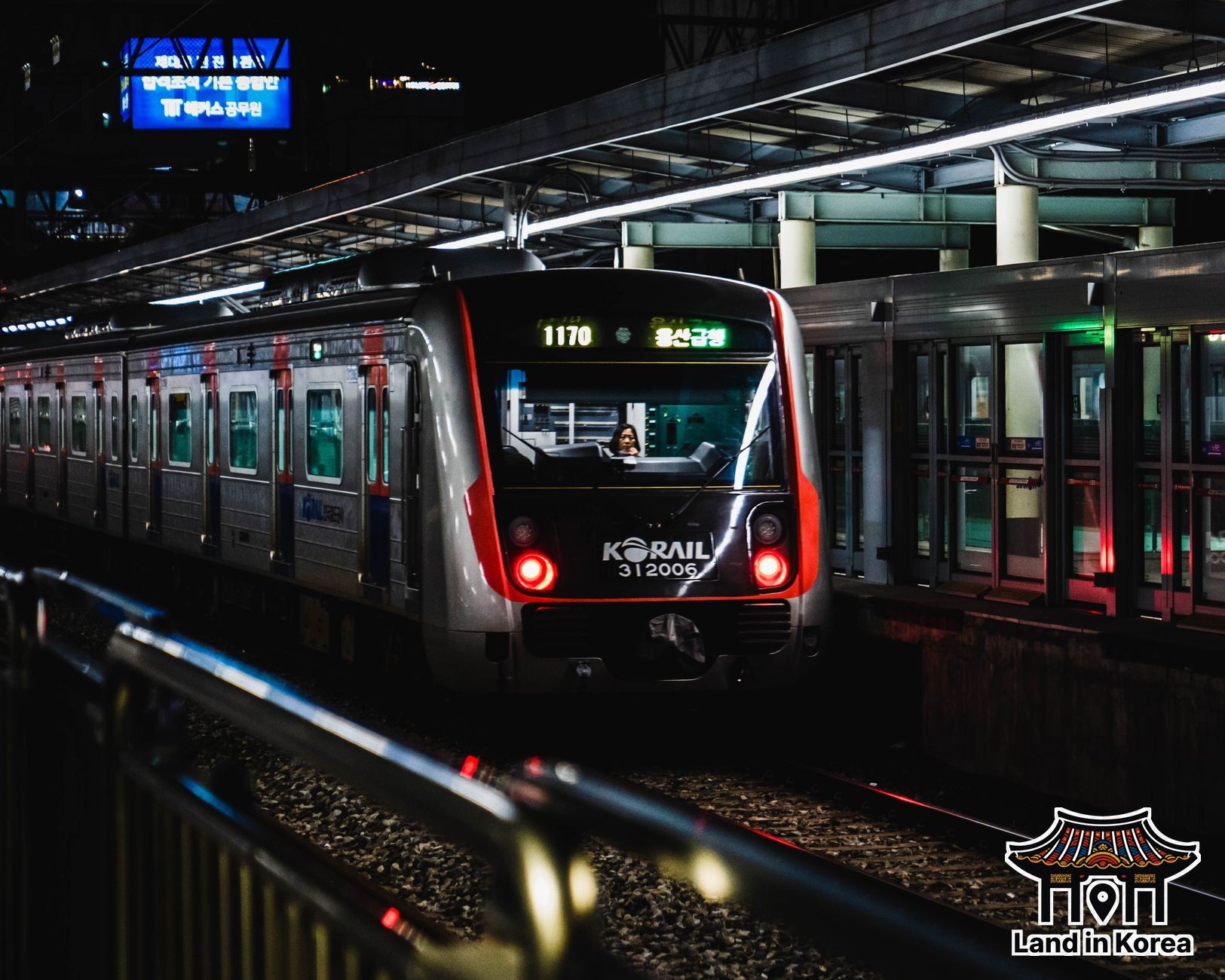
For most day trips out of Seoul, the KTX is the wrong train. It's built for Busan and Gwangju, not for a lake town an hour away, and on short hops the minutes it saves usually vanish in the trip to the KTX station. The smarter tools are the slower ones: Korail's conventional trains, and a subway network that quietly runs deep into Gyeonggi and Gangwon provinces on an ordinary transit card.
The long-distance comparison (KTX versus SRT versus buses) and the Nami Island route are covered in their own posts. This one is about the short trips, and how to pick between a cheap reserved train and a subway ride that needs no ticket at all.
Quick comparison
| Train class | Tier | Example use |
|---|---|---|
| Mugunghwa-ho | Cheapest, slowest, stops almost everywhere | Small stations nothing else serves |
| ITX-Saemaeul / ITX-Maum | Mid-tier — fewer stops, faster, still well under KTX price | Most regional routes |
| ITX-Cheongchun | Commuter express | Seoul (Yongsan/Cheongnyangni) to Chuncheon via Gapyeong |
| Subway (Gyeongchun, Gyeongui-Jungang, Suin-Bundang lines) | Regular transit fare, no reservation | Chuncheon, Yangpyeong, Paju, Incheon — slower but ticket-free |
Why the slow train often wins
High-speed rail in Korea runs on a few trunk lines. Plenty of popular day-trip towns simply aren't on them. Chuncheon, the dakgalbi city on the lakes northeast of Seoul, has no KTX at all; the fastest rail option is the ITX-Cheongchun. The small towns along the Jungang Line east of Seoul are the same story: the conventional trains stop there, and the fast ones don't.
Even where KTX does run, check the whole door-to-door time. A 20-minute saving on the train can disappear if the KTX leaves from a station across the city while a slower train leaves from the one near your hotel.
Be honest with the map, though. Jeongdongjin, the east-coast sunrise station, is the exception: KTX trains on the Gangneung line stop there and take around two hours from Seoul, while the conventional route takes more than twice as long. Pick the slow train there only if the long ride through the mountains is the point.
The train classes, decoded
Korail's non-KTX trains come in a few tiers, and the names on the booking screen tell you what you're getting:
- Mugunghwa-ho is the cheapest and slowest, and it stops almost everywhere. It's the train for tiny stations the others skip.
- ITX-Saemaeul is the mid tier: fewer stops, faster, and still much cheaper than KTX.
- ITX-Maum is the newer mid-tier train Korail introduced in 2023. It sits in the same class as ITX-Saemaeul and has been replacing Mugunghwa services on several lines, so you may see it on routes where older guides mention Mugunghwa.
- ITX-Cheongchun is the commuter express to Chuncheon, running from Yongsan or Cheongnyangni via Gapyeong. It sells reserved, non-reserved and standing tickets.
Know your departure station before you book. Trains toward Gangwon and the Jungang Line mostly leave from Cheongnyangni in northeastern Seoul, while trains heading south on the Gyeongbu and Honam lines leave from Seoul Station or Yongsan. Getting that wrong costs more time than the class of train ever will.
Booking without the KTX stress
These trains are booked the same way as KTX: on Korail's English-language site (letskorail.com) or the Korail Talk app. The difference is pressure. Outside the Seollal and Chuseok holidays and busy weekend mornings, conventional trains rarely sell out, so booking the day before, or even at the station, is usually fine. If you're traveling around a holiday, book as soon as sales open.
If you already hold a Korail Pass, the unlimited rail pass sold to foreign visitors, it covers Mugunghwa, ITX-Saemaeul and ITX-Cheongchun as well as KTX. It does not cover the metropolitan subway lines in the next section, even where they run on Korail track. Foreign residents who have been registered in Korea for a long stay aren't eligible for the pass, so check the conditions before buying.
Day trips with no ticket at all
Seoul's subway doesn't stop at the city limits. Several lines run well out into the countryside, and you ride them with the same T-money or credit card you use downtown. There's no seat reservation, and the fare is distance-based, so it rises on longer rides but stays in regular subway territory.
- Gyeongchun Line runs from eastern Seoul all the way to Chuncheon, passing Gapyeong and Gangchon on the way.
- Gyeongui-Jungang Line, eastern branch follows the Han River to Yangsu (for Dumulmeori, where two rivers meet), Yangpyeong and beyond toward Yongmun.
- Gyeongui-Jungang Line, western branch heads north toward Paju and Munsan. Heyri Art Village isn't really a train trip: bus 2200 or 2200-1 from Hapjeong or Hongik University Station gets there in roughly 45 to 50 minutes, so check Naver or Kakao Map for current routing.
- Suin-Bundang Line runs from Wangsimni in Seoul through Bundang and Suwon to Incheon Station, right beside Incheon's Chinatown.
The catches on outer lines
The trade-off is time. These are all-stops commuter trains, and a "subway" day trip to the end of the line can run well over an hour each way. Build that into your plan instead of discovering it on the platform.
The Seoul subway guide on this site already warns that some suburban trains terminate early. On outer sections it goes further than that:
- Fewer trains go the full distance. Outer stations can be served by only some of the trains on a line, with long gaps between them. Check the timetable for your actual station, not the line's general frequency.
- Skipped stops are common. Some services run express and skip smaller stations. Confirm that the train in front of you stops where you're going.
- Shared track doesn't mean a shared ticket. ITX-Cheongchun runs on the same Gyeongchun Line track as the subway and stops at some of the same stations, but it needs its own ticket. Tapping your transit card doesn't cover it.
- The last train back leaves earlier than you'd think. It departs from the far end of the line, so check the time for your return station before you settle in for dinner.
Choosing for your trip
Use the subway lines when you want flexibility and don't mind a long, cheap ride: Yangpyeong, Dumulmeori, Gapyeong or Chuncheon with no fixed return time. Book an ITX when the ride itself is long enough that a guaranteed seat and a faster run are worth paying for, which is most trips to Chuncheon or along the Jungang Line. Pick Mugunghwa for the small stations nothing else serves. And for Jeongdongjin or anywhere on a high-speed line, compare the KTX honestly before assuming slow is better.
Official sources
This guide is checked against Korail. Prices, hours, and procedures change — confirm time-sensitive details there before you rely on them.
Frequently Asked Questions
Can I get to Chuncheon from Seoul on the subway?
Yes, the Gyeongchun Line runs from eastern Seoul to Chuncheon Station on a regular transit card with no reservation. It is the slow option, and the ITX-Cheongchun on the same route is faster but needs a separate ticket.
Is Mugunghwa cheaper than ITX-Saemaeul?
Yes, Mugunghwa-ho is Korail's cheapest class, with ITX-Saemaeul and the newer ITX-Maum a step above it in both price and speed. All of them cost far less than KTX on the same route.
Do I need to book regular Korail trains in advance?
Usually not far ahead, because Mugunghwa and ITX trains rarely sell out on normal days. The exception is the Seollal and Chuseok holiday periods, when you should book as soon as tickets go on sale.