
Seoul Subway Details Nobody Tells You: Exits and Transfers
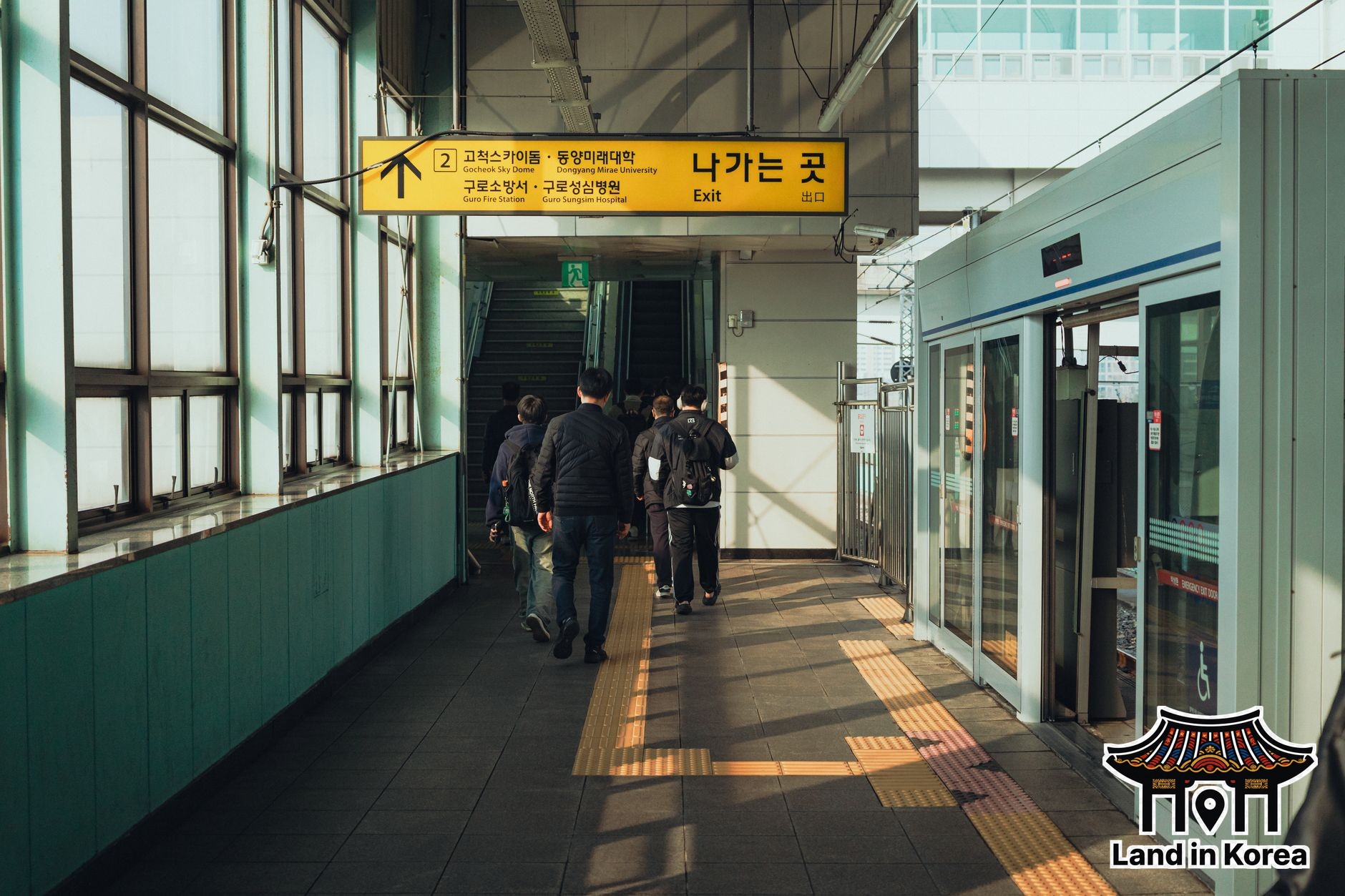
The Seoul subway is genuinely easy. What trips people up isn't the system — it's the four details nobody mentions: which exit you take, how far you have to walk to transfer, whether your train actually stops where you think, and what "last train" really means.
The exit number matters more than the station
You can get off at the correct station and still lose fifteen minutes. Big stations have a dozen or more exits spread across several blocks, and surfacing at the wrong one can mean walking back underground the length of the station, or standing on the wrong side of a six-lane road with no crosswalk in sight.
Both Naver Map and Kakao Map tell you which exit to use — not "the station," the exit. Use it. Many routes go further and tell you which car and which door to board so you step off directly beside the transfer stairs or the exit escalator. It looks like overkill until the first time you do it and walk straight up while everyone else shuffles down the platform.
Google Maps is not the tool for this in Korea. Download Naver or Kakao before you arrive.
Not all transfers are equal
A transfer can mean crossing the platform — ten steps, thirty seconds. Or it can mean Jongno 3-ga or Gongdeok, where you walk long corridors, take multiple escalators, and arrive genuinely winded.
This is why the route your app calls "fastest" isn't always fastest in practice. A journey with one transfer often beats one that's technically shorter but involves two. When you're comparing options, look at the number of transfers as well as the total minutes — especially with luggage, in August heat, or during rush hour when those corridors are a slow-moving crowd.
Not every train on a line is the same train
Line 9 runs express services that skip most stations. Brilliant if you're going a long way; frustrating if you board one and sail past your stop. Check the platform signage and the train itself.
Suburban lines are trickier. The Gyeongui–Jungang and Gyeongchun lines (the one toward Chuncheon) run limited and terminating services that may stop well short of where you assumed you were going. Read the destination, not just the line colour.
And two lines cost extra on top of the base fare: the Sinbundang Line and the AREX express to Incheon Airport. Neither is expensive, but both surprise people who thought they'd budgeted for a standard subway ride.
"Last train" isn't midnight
Service starts around 5:30 a.m., and last trains leave central stations around midnight. Here's the part people get wrong: "last train" means the last train from that station, in that direction — not from downtown. If you're out in Hongdae heading to a suburb, your actual last departure may be considerably earlier than you think.
Look up the real departure time for your station and direction before the night gets away from you.
Miss it anyway? The N-numbered night buses run through the early hours and accept T-money, so you're not automatically stuck with a taxi fare.
The priority seats aren't optional
Every car has a cluster of seats near the doors reserved for the elderly, pregnant passengers, and people with disabilities, usually marked in a different color from the rest of the seating. Korean riders leave them empty even on a packed train with no one obviously needing them, and sitting there as a healthy-looking younger passenger draws visible disapproval fast. Pregnant passengers additionally get a pink seat-marker sticker and keychain (임산부 배려석) they can request from a station office, which signals a claim on the seat even without a visible bump.
Before your first ride
Download Naver or Kakao Map. Screenshot your exit number. Check whether your train is express and where it terminates. And if you're heading home late, check the last train for your platform — not the general midnight rule.
Related guides
- The card you'll tap every ride
- Buses, the subway's counterpart
- Where the subway lines actually end
- Which map app to navigate with
Official sources
This guide is checked against Seoul Metropolitan Government and T-money. Prices, hours, and procedures change — confirm time-sensitive details there before you rely on them.
Frequently Asked Questions
Which map app should I use for the Seoul subway?
Naver Map and Kakao Map both tell you which exit to use, and many routes even tell you which car and door to board so you arrive next to the transfer stairs. That level of detail makes a real difference at large stations.
Are there any Seoul subway lines that cost extra?
Yes — the Sinbundang Line and the AREX express to Incheon Airport both carry extra fares on top of the base subway fare. They're the two that most commonly surprise visitors.
What happens if I miss the last subway train in Seoul?
The N-numbered night buses run through the early hours and accept T-money. Just remember that the last train means the last one from your station in your direction, not from downtown, so check the actual departure time rather than assuming midnight.