
T-money Transit Card in Korea: Complete 2026 Guide
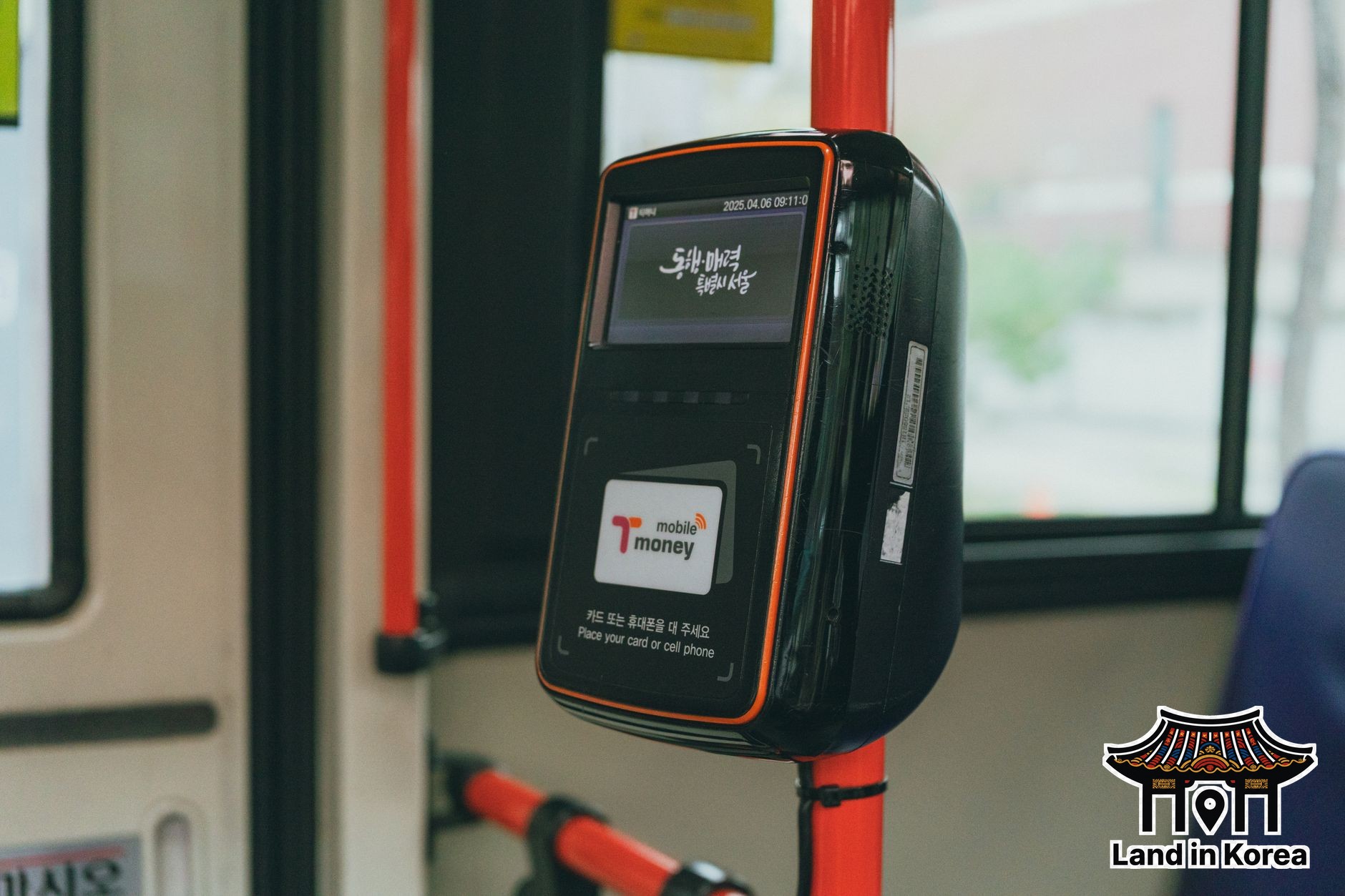
When you arrive in Korea, one of the first things you should buy isn't food or souvenirs. It's a T-money card.
A T-money card is Korea's standardized contactless payment card used for subways, buses, taxis, and even convenience stores. If you plan to use public transportation (which you almost certainly will), this card saves you time, money, and stress compared to buying individual tickets.
The alternative is buying a single-journey ticket from a machine before every ride, paying a deposit on it, and then queuing again at a deposit-refund machine on the way out. That is the loop a transit card removes.
What Is a T-money Card?
A T-money card is a rechargeable contactless smart card that works on all of Korea's public transportation systems. Instead of buying individual subway tickets or bus tickets each time, you load money onto the card and tap it at readers on subway gates, bus terminals, and taxi payment systems.
It's one unified system across the entire country. Seoul subways, Busan buses, Jeju taxis — all accept the same card. Beyond transit, it is also accepted at a lot of everyday points of sale: convenience stores, some vending machines, and many parking and locker payment machines.
Think of it as Korea's answer to London's Oyster card or Japan's Suica card. It's ubiquitous. It's convenient. And it's the first thing you should get.
Where to Buy a T-money Card
You can buy a T-money card at any convenience store in Korea: GS25, CU, Emart24, Ministop, or convenience stores inside subway stations. You can also buy them at subway station ticket booths.
Cost: the blank card is a small one-time purchase, and the price varies by design — plain cards are the cheapest, character and novelty editions cost more. Check the price at the counter. Whatever you pay for the card is separate from the money you load onto it.
Where to buy (easiest):
- Walk into any convenience store you see (they're everywhere)
- Go to the counter and say or show: "티머니 카드 주세요" (T-money kadeu juseyo — a T-money card, please)
- Pay for the card
- The cashier will hand you the card, which is pre-activated
That's it. The card is ready to use immediately after purchase. No activation required.
How to Load Money Onto Your T-money Card
Once you have the card, you need to add money to it. This is called "charging" or "loading."
At a convenience store:
- Go to any convenience store (GS25, CU, Emart24, etc.)
- Hand your T-money card to the cashier
- Tell them how much you want to add: "만 원 충전해 주세요" (man won chungjeon hae juseyo — load 10,000 won, please). Swap in 이만 원 for 20,000 or 오만 원 for 50,000.
- Common amounts: 10,000 won, 20,000 won, 50,000 won
- Pay the cashier the amount you want to load
- They tap your card on their reader and hand it back
- You now have that balance on your card
At a subway station: Most subway stations have T-money charging machines (충전기). Look for a kiosk with "T-money" signage.
- Insert your card
- Select the amount (usually 10,000₩, 20,000₩, 50,000₩ options)
- Insert cash or tap your credit card
- Machine confirms the transaction
- Remove your card and go
On top-up limits: cash top-ups are made in set increments, and an anonymous card has a cap on how much balance it can hold at once. The exact minimum and ceiling are set by the operator and have been revised over the years, so confirm them on the official T-money site rather than relying on a figure quoted in a travel guide. In practice none of this constrains a visitor: you can reload as many times as you like, and topping up 10,000–50,000 won at a time stays well inside any limit.
Subway Fares and How Much to Load
Seoul subway fares are distance-based, starting from a flat base fare that covers the first 10 km. Since the most recent adjustment on June 28, 2025, the adult base fare is 1,550 won on a transit card and 1,650 won if you buy a single-journey ticket with cash — one of several reasons the card pays for itself quickly. Trips past 10 km add incremental steps on top of that, so a cross-city ride costs more than the base fare but still lands in low single-digit thousands of won.
One bonus worth knowing: tap in before 6:30 a.m. on a weekday and the base fare of your first ride is discounted by 20%.
Fares are reviewed periodically and the base fare has risen twice in recent years, so treat any figure you read — including this one — as something to confirm before you budget tightly.
If you're visiting for a week and taking subways daily, budgeting around 50,000 won for transit is a reasonable starting point. Add more if taxis and buses are in the mix.
A practical approach: First load: 20,000 won. Use it for 2-3 days of exploration. Then recharge when you're down to 5,000 won. This way you always have a buffer and don't need to charge from zero.
Using Your T-money Card on Subways
Entering the subway:
- Approach the ticket gate (개찰구, gaechalgu)
- Look for the white/blue card reader symbol on the gate
- Tap your card on the reader (usually the top right of the gate)
- The gate opens automatically
- Walk through
No tickets. No machines. Just tap and go.
Reading the display: When you tap your card, a small screen shows the amount deducted and what's left. A display reading "1,550원 차감 / 잔액: 18,450원" means 1,550 won was taken and 18,450 won remains.
Exiting the subway: Tap your card again at the exit gate. The system calculates your fare automatically based on distance traveled (the system knows where you entered and where you exit).
Transfer between lines: If you transfer to another subway line within 30 minutes, you don't pay an additional fare. Just tap your card when you enter the new line. The system recognizes it as a transfer and doesn't double-charge.
Using Your T-money Card on Buses
Boarding a bus:
- Enter through the front door (where the card reader is)
- Look for the card reader (usually a vertical pole with a light-up sensor)
- Tap your card on it
- A chime sounds and a screen shows your balance and remaining fare
- Continue to a seat
In Seoul the fare depends on what colour the bus is rather than how far you ride within the base distance. On the city's current fare table an adult pays 1,500 won on a blue (trunk) or green (branch) bus, 1,400 won on a yellow circular bus, and 3,000 won on a red express bus, and the price is the same whether you tap a card or pay cash. The base fare covers the first 10 km — 30 km where a red express bus is involved — and longer rides add 100 won per additional 5 km. Other cities set their own tables.
Exiting: Some buses require you to tap your card again at the exit reader (located near the rear door). Other buses don't. When in doubt, tap when exiting to be safe.
Transfer between bus and subway: If you take a bus and transfer to a subway (or vice versa) within 30 minutes, you get a discount. The system recognizes it as a transfer and only charges a partial fare for the second leg.
Using Your T-money Card for Taxis
Not all taxis accept T-money, but most modern ones do.
If the taxi has a card reader:
- At the end of the ride, the driver tells you the fare
- You can ask: "카드 돼요?" (Card okay?)
- If yes, tap your card on their reader
- The system deducts the fare immediately
- No need to carry cash
On taxi fares: a standard mid-size taxi in Seoul starts at a 4,800-won base fare covering the first 1.6 km, then charges by distance and by time when the traffic is slow enough. A late-night surcharge applies for part of the night, and deluxe (모범) taxis start higher but usually skip that surcharge. Fares are set by each city and province and are revised periodically, so the Seoul figure is a reference point rather than a national rate — treat "a short city hop runs well under 10,000 won" as the working rule.
Important: Not all taxis have T-money readers. Some drivers prefer cash and don't have the equipment. If the taxi driver says no to T-money, you'll need to pay cash (ATMs are at convenience stores).
Using Your T-money Card at Stores and Restaurants
Yes, you can use T-money almost everywhere in Korea.
Convenience stores (GS25, CU, Emart24): You can buy snacks, drinks, and meals and pay with T-money. Tap your card at the payment terminal.
Restaurants: Some casual restaurants and kimbap chains accept T-money (though not all full-service restaurants do). Look for the T-money logo.
Vending machines: Many drink and snack vending machines accept T-money. Look for the card reader.
Parking meters: Pay for parking with T-money at automated machines.
Basically, if you see a T-money logo, you can use the card. But always carry some cash as backup, since not every place accepts cards.
Checking Your Balance
Online: Visit www.t-money.co.kr. You can check your balance and transaction history (some features require Korean language ability).
At a convenience store: Ask a cashier: "잔액 확인 가능해요?" (Can you check my balance?). They can tap your card and show you the amount.
At a subway station: Use the balance-checking machines (잔액조회기) located throughout stations. Tap your card and the screen displays your current balance.
What Happens If Your Card Is Lost
If you lose your T-money card:
- Report it to the T-money customer center: 1600-0111
- Provide details: when and where you lost it, your card number (if you remember it)
- The balance is frozen to prevent theft
- You can request a refund of any remaining balance
- Buy a new card and load money onto it
This is one advantage of T-money over cash. Your money is protected if the card is lost.
Refunds and Unused Balance
Refunding money from your card: If you're leaving Korea and have money left on your card, you can get a refund at:
- Any convenience store (GS25, CU, Emart24): tell the cashier "환불해 주세요" (hwanbul hae juseyo — refund, please). A small processing fee is deducted, and stores will only refund balances below a set ceiling.
- T-money customer center: 1600-0111
- Some tourist information centers
The fee and the over-the-counter refund ceiling are set by the operator and change from time to time, so check the current terms on the official site if the remaining balance is large enough to matter. The price you paid for the card itself is not refundable; the money you loaded is.
Habits that make the card work better
Keep the card somewhere it can be tapped on its own. Two contactless cards in the same wallet can confuse a reader, which at a gate means the barrier staying shut with a queue behind you.
Reload before you hit zero rather than after. A card with nothing on it won't open a gate, and the top-up machine is usually on the wrong side of it. Topping up when you're down to around 5,000 won keeps a ride and a bus transfer in reserve.
Don't put the card away when you leave transit. The same balance works at convenience store counters and a lot of vending and locker machines, which cuts down on carrying coins.
A card doesn't expire, and the balance survives between trips — so one bought on a previous visit is usually still good years later. If you're travelling as a group, a card each is simpler than passing one around, since a single card can't pay two fares at the same gate.
Related guides
- Subway details worth knowing
- Using T-money on city buses
- Getting into the city on arrival
- T-money works in taxis too
Official sources
This guide is checked against T-money. Prices, hours, and procedures change — confirm time-sensitive details there before you rely on them.
Frequently Asked Questions
Do I have to buy a T-money card or can I just buy individual tickets?
You can buy single-journey tickets from station machines, but each one carries a refundable deposit you have to reclaim at a separate machine on the way out, and the cash fare is higher than the card fare on every ride. Over a week that's a meaningful gap plus a lot of queuing. For any stay longer than a day or two, the card wins.
What's the difference between T-money and Cashbee?
They are competing stored-value transit cards, and for a visitor the practical difference is small — both are accepted across the national transit network and at many of the same shops. T-money is the more widely recognised brand and the one most guides and signs reference, which is the main reason to default to it. If a shop hands you a Cashbee card, it will still get you through the gates.
Can I use my personal credit card instead of T-money?
Contactless bank-card acceptance at Korean gates has been expanding but is still uneven by line and by city, so it isn't something to rely on for every ride. A transit card remains the option that works everywhere, and it costs very little up front.
How long does the card last before it needs replacing?
T-money cards are designed to last for years. Unless the card is damaged or malfunctions, you won't need to replace it. The balance is what matters, not the physical card.