
Hongdae Nightlife and Youth Culture District Guide
The schedule mistake almost everyone makes
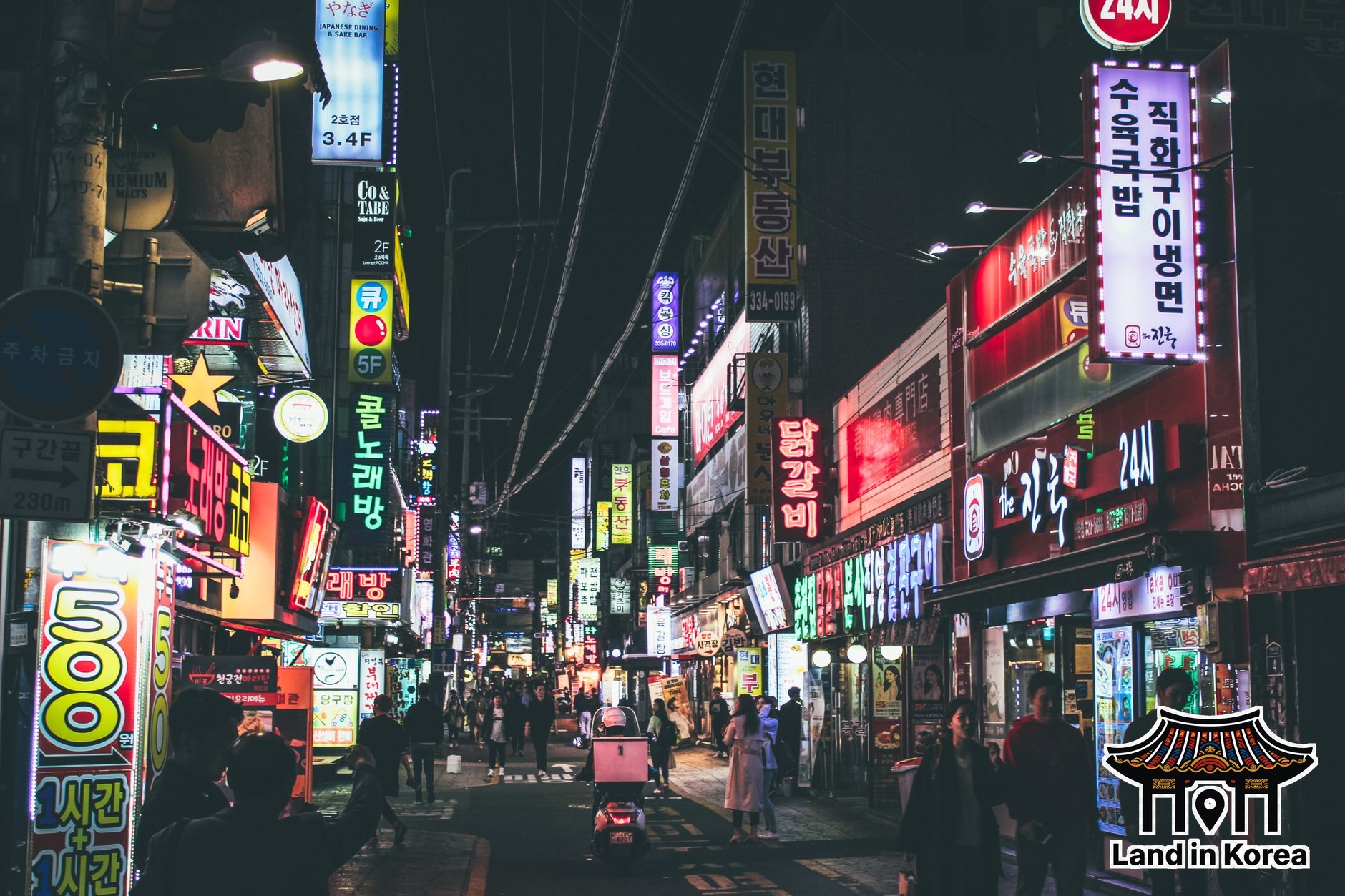
Hongdae — named for Hongik University, whose campus anchors the neighborhood — runs on a schedule that catches most first-time visitors off guard. Walk through at 2pm and the main streets can look half-asleep: a lot of shops open late, the food stalls aren't running yet, and the club strip is quiet. The area doesn't really wake up until evening, and it doesn't hit full stride until Friday and Saturday night, when the streets around the university playground fill with buskers, students, and bar crowds. Show up expecting daytime energy and the hype won't make sense; show up after 9pm on a weekend and it's a different neighborhood.
How a fine arts campus turned into Seoul's indie capital
The district's identity traces back to Hongik University, known for its fine arts program, and the cheap rents that once surrounded its campus. In the early 1990s, as neighboring Sinchon's underground music scene got priced out by rising commercialization, musicians and artists moved into Hongdae instead. Early live venues gave punk and experimental bands a home, and by the mid-1990s bands like Crying Nut and Sister's Barbershop came out of that scene — now widely credited with helping start Korea's indie music movement. That history still shapes the neighborhood: small live-music clubs and design studios sit just blocks from the main bar strip.
Where the clubs and bars actually cluster
Club and bar streets here stay open late, well past when most other Seoul neighborhoods wind down. The district is compact by Seoul standards — clubs, bars, and late-night food stalls sit within a few blocks of each other rather than spread across the city, so bar-hopping on foot is realistic without needing a taxi between stops. The densest concentration is in the alleys around Hongik University's main gate and the plaza known as the university playground; side streets fan out from there with everything from EDM clubs to small indie live venues.
The busking scene isn't on a fixed schedule
The street performances Hongdae is known for cluster along the pedestrian street near the university playground, but they aren't continuous — performers show up mostly on weekend evenings, and the number of active spots thins out considerably on weekdays. A Tuesday-afternoon visit expecting the wall-to-wall performers seen in weekend videos will be underwhelming. If busking is the main draw, plan for a Friday or Saturday evening rather than a weekday stop.
The Saturday market worth timing a visit around
The Hongdae Free Market runs every Saturday from 1pm to 6pm, March through November, at the Hongik University Children's Playground. It's been running since 2002 and only features original, handmade work — ceramics, leather goods, accessories, small paintings — rather than the secondhand or imported goods typical of other flea markets. There's no admission fee. Because it only runs on Saturdays and only in the warmer months, it's worth checking the calendar before building a trip around it specifically.
Shopping runs to the side streets, not the main road
The main road through Hongdae leans toward larger streetwear and cosmetics chains, but the real browsing happens on the side streets, where small independent clothing boutiques and vintage shops outnumber the big names. It's a different experience from the mall-dense main drag of Myeongdong — smaller stock, more one-off pieces, and prices that vary shop to shop rather than fixed retail pricing.
Getting there and getting home afterward
Hongik University Station, on subway Line 2 and also served by the Airport Railroad, sits right at the edge of the district. Exit 9 puts you closest to the main shopping street and busking area, with Exit 8 as a calmer alternative when the main exit is crowded. The catch is timing the trip home: Seoul's subway lines generally stop running around midnight to 1am, often before a night out here wraps up. A T-money card works on the backup option too — Seoul's "owl" night buses, marked with an N prefix, run on set routes roughly from midnight to dawn, though far less frequently than daytime buses. Past that, calling a taxi through an app is the more reliable way to get back once trains stop.
The short version
- Hongdae is quiet in the afternoon and doesn't pick up until evening, peaking Friday and Saturday nights
- The neighborhood grew out of Hongik University's fine arts scene and Seoul's early-1990s indie music movement
- Clubs, bars, and food stalls cluster within a few walkable blocks around the university's main gate and playground area
- Street busking is heaviest on weekend evenings, not a fixed daily schedule
- The Hongdae Free Market runs Saturdays 1-6pm, March through November, handmade goods only, no admission fee
- Boutique and vintage shopping is concentrated on the side streets, not the main road
- Hongik University Station (Line 2) Exit 9 is the main access point; Exit 8 is a quieter alternative
- Subway service stops around midnight to 1am — night buses or a taxi app cover the rest
Official sources
This guide is checked against Korea Tourism Organization. Prices, hours, and procedures change — confirm time-sensitive details there before you rely on them.
Frequently Asked Questions
What time does Hongdae nightlife actually start?
Late afternoon into evening at the earliest, with the district reaching full energy after around 9pm — especially on Friday and Saturday. Daytime visits miss most of what makes the area worth seeing.
Why is Hongdae associated with indie music and art?
It grew out of Hongik University's fine arts program and the cheap rents that drew musicians here in the early 1990s after Sinchon's scene got priced out. Bands like Crying Nut and Sister's Barbershop came out of that era and helped start Korea's indie music movement.
When does the Hongdae Free Market run?
Saturdays from 1pm to 6pm, March through November, at the Hongik University Children's Playground. It only features original handmade work, and there's no entry fee.
Is the busking in Hongdae happening every day?
No — it clusters on weekend evenings near the university playground and thins out substantially on weekdays, so timing matters if street performances are the reason for the visit.
How do I get to Hongdae by subway?
Hongik University Station on Line 2, also served by the Airport Railroad. Exit 9 leads to the main shopping and busking area; Exit 8 is a calmer alternative when it's crowded.
What if I miss the last subway train home from Hongdae?
Seoul's subway generally stops running around midnight to 1am. After that, night "owl" buses (marked with an N prefix) run limited routes until around dawn, or a taxi booked through an app is the more dependable backup.