
Insadong: Seoul's Traditional Culture Street Guide
Most visitors never leave the main street
Insadong-gil, the main road, is what shows up in every photo — but it's lined with tourist-facing shops, while the antique dealers, small galleries, and calligraphy studios sit in the narrow side alleys branching off it. Walk one alley over and the crowd thins fast. If you only walk the main street and turn back, you've seen the packaging, not the district — budget time for two or three side lanes.
The Sunday pedestrian street has a specific window
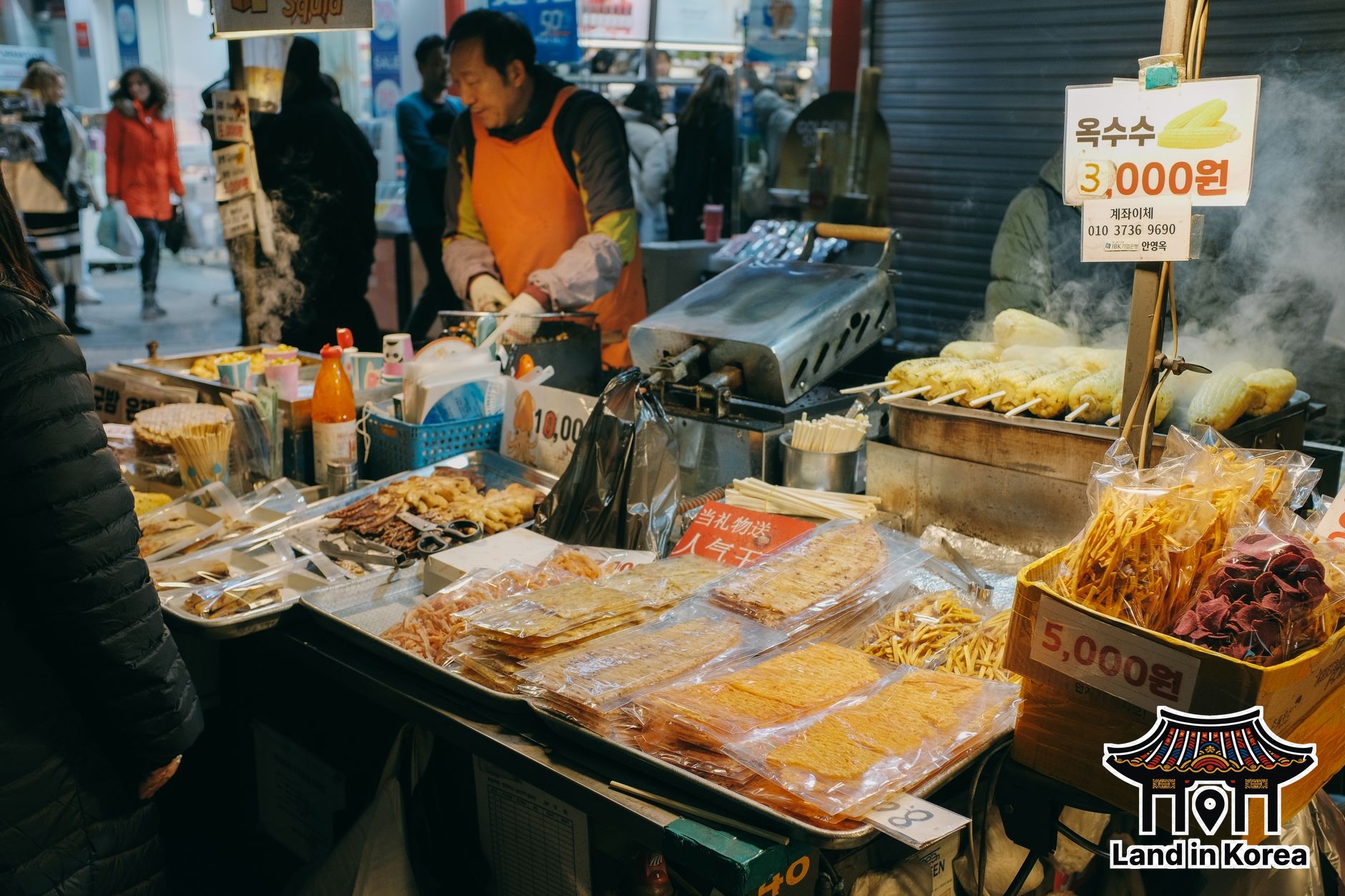
Insadong-gil closes to vehicles on Sundays from 10 a.m. to 10 p.m., not all day and not every day — a common mix-up for first-timers who show up on a weekday expecting a car-free street. During those hours, shops spill onto the road with outdoor stalls selling hanbok, street food like pajeon (savory pancakes), and hanji goods, plus street performers. Outside that window it's an ordinary, if narrow, street with regular traffic — a Sunday visit changes the character of the whole trip.
Ssamziegil is worth a dedicated stop, not a walk-through
Ssamziegil is a shopping complex just off the main street built around a single continuous spiral ramp, so you walk up through four floors without a staircase, circling an open central courtyard the whole way. It opened in 2004 and holds around 70 small, independent shops — handmade jewelry, ceramics, illustrated prints, hanji goods, and indie fashion, mostly run by individual designers rather than chains. The rooftop has a small garden and a view over the neighborhood, and the spiral naturally leads you there.
What hanji actually is, and why it's not just souvenir paper
Hanji is handmade paper made from the inner bark of the paper mulberry tree, produced in Korea for over a thousand years. It has a naturally alkaline pH, unusual for paper, which resists the acid breakdown that destroys ordinary paper over time — a large share of Korea's oldest surviving books and documents are made on it. Korea submitted an application in 2024 to have hanji-making knowledge added to UNESCO's Intangible Cultural Heritage list, with a decision expected in late 2026. In Insadong, hanji shows up as stationery, lamps, fans, and wall art — one of the few souvenirs here that's a genuine craft product rather than mass-produced.
Jogyesa Temple is a short walk, not a detour
Jogyesa sits about a 10-minute walk from Insadong's north end and is the head temple of the Jogye Order, the largest Buddhist order in South Korea — closer to Korean Buddhism's administrative center than a typical neighborhood temple. The current buildings date mostly to a 1930s-era reconstruction, since the original site went through name changes and rebuilding during the 20th century before settling as Jogyesa in 1954. The main hall is open roughly 4 a.m. to 9 p.m., the grounds are accessible around the clock, and there's no admission fee — a genuinely calm break from the shopping street, especially on a weekday.
A hanok museum with its own tea house
The Kyung-in Museum of Fine Art, tucked in one of Insadong's alleys, opened in 1983 and is built around a preserved hanok, making it one of the country's older hanok-based art spaces. Admission is free, and beyond the exhibition halls there's a small garden and an on-site tea house serving a wide range of Korean teas — a quieter alternative to the tea houses on the main street. It also hosts small outdoor concerts in spring and fall.
Traditional tea houses reward sitting down, not passing through
The 전통찻집 (traditional tea houses) tucked into Insadong's alleys serve tea the old way — brewed to order, often with a small side snack, meant to be lingered over rather than grabbed to go. Treating one like a quick coffee stop misses the point; these rooms are usually small and quiet, decorated with traditional furniture and art, and the experience is as much about the setting as the drink. Most sit one or two doors off the main road, so they're easy to miss while scanning storefronts.
Getting there and timing it right
Anguk Station on subway Line 3 is the closest stop, within a short walk of both the main street and Jogyesa. Weekday mornings are noticeably quieter than weekend afternoons, when the pedestrian zone fills with tourists and local visitors browsing the same stalls. Bukchon Hanok Village and Gyeongbokgung Palace are close enough to combine into one walking day, and Myeongdong's shopping district is a short subway ride away for a modern-shopping contrast afterward.
The short version
- Main street shops are the tourist face — real antique dealers and galleries are in the side alleys
- Car-free pedestrian hours are Sundays, 10 a.m. to 10 p.m. only, not all day or every day
- Ssamziegil: a spiral-ramp building with ~70 independent shops and a rooftop garden
- Hanji is genuine handmade paper with a 1,000+ year history and a pending UNESCO application
- Jogyesa Temple, a 10-minute walk away, is Korea's largest Buddhist order's head temple, free to enter
- Kyung-in Museum of Fine Art: a free hanok art space with its own traditional tea house
- Traditional tea houses are for sitting and lingering, not a quick stop
- Anguk Station (Line 3) is the closest subway access point
Official sources
This guide is checked against Korea Tourism Organization. Prices, hours, and procedures change — confirm time-sensitive details there before you rely on them.
Frequently Asked Questions
Is Insadong open on Sundays?
Yes, and Sunday is the best day to go — Insadong-gil closes to vehicles from 10 a.m. to 10 p.m., turning the main street into a pedestrian zone with outdoor stalls and street performers.
What is Ssamziegil and is it worth visiting?
A spiral-shaped shopping complex off Insadong's main street with around 70 small independent shops across four floors, built around a continuous ramp instead of stairs. It's worth a dedicated stop, not just a walk-through.
What is hanji and why do people buy it in Insadong?
Traditional Korean handmade paper made from mulberry bark, valued for its durability and used for over a thousand years in books and documents. In Insadong it's sold as stationery, lamps, and art — a genuine craft item rather than a mass-produced souvenir.
Is Jogyesa Temple worth adding to an Insadong visit?
Yes — about a 10-minute walk from Insadong's north end, free to enter, and the head temple of the Jogye Order, South Korea's largest Buddhist order.
What's the closest subway station to Insadong?
Anguk Station on Line 3, also within walking distance of Jogyesa Temple.
When is Insadong least crowded?
Weekday mornings. Weekend afternoons, especially during the Sunday pedestrian hours, draw the largest crowds.