
Learning to Read Hangul in a Weekend (and Why Bother)
What you actually need to know
Being able to decode even slowly means you can order at a Korean-only kiosk, recognize a bus destination, and tell 입구 (entrance) from 출구 (exit). You don't need vocabulary or grammar for any of that — just the letters.
Romanization is the part nobody warns you about, because Korea has used more than one system and old spellings persist. The government's Revised Romanization is standard on road signs and subway maps today, but older McCune-Reischauer spellings survive in business names, academic writing, and personal names, so the same syllable may appear as 'gim' or 'kim', 'Busan' or 'Pusan', 'Insa-dong' or 'Insadong'. Surnames are especially inconsistent, with 이 written as Lee, Yi, or Rhee depending on the person's own preference. Knowing a handful of address and place-name elements also helps enormously: -ro (main road), -gil (smaller street), -dong (neighborhood), -gu (district), -si (city).
How the alphabet actually fits together
Hangul has 14 basic consonants and 10 basic vowels — 24 letters total, which is where the "learnable in a weekend" claim comes from. The part that looks intimidating to newcomers is that letters aren't written in a straight line like the Latin alphabet; they're stacked into square syllable blocks, with each block representing one spoken syllable. A block is built from a consonant, a vowel, and sometimes a second closing consonant, arranged left-to-right or top-to-bottom depending on the vowel's shape. Once that stacking logic clicks, sounding out an unfamiliar word becomes a matter of reading each block in order, the same way you'd sound out English letters — you don't need to know what the word means to read it out loud.
A realistic weekend study plan
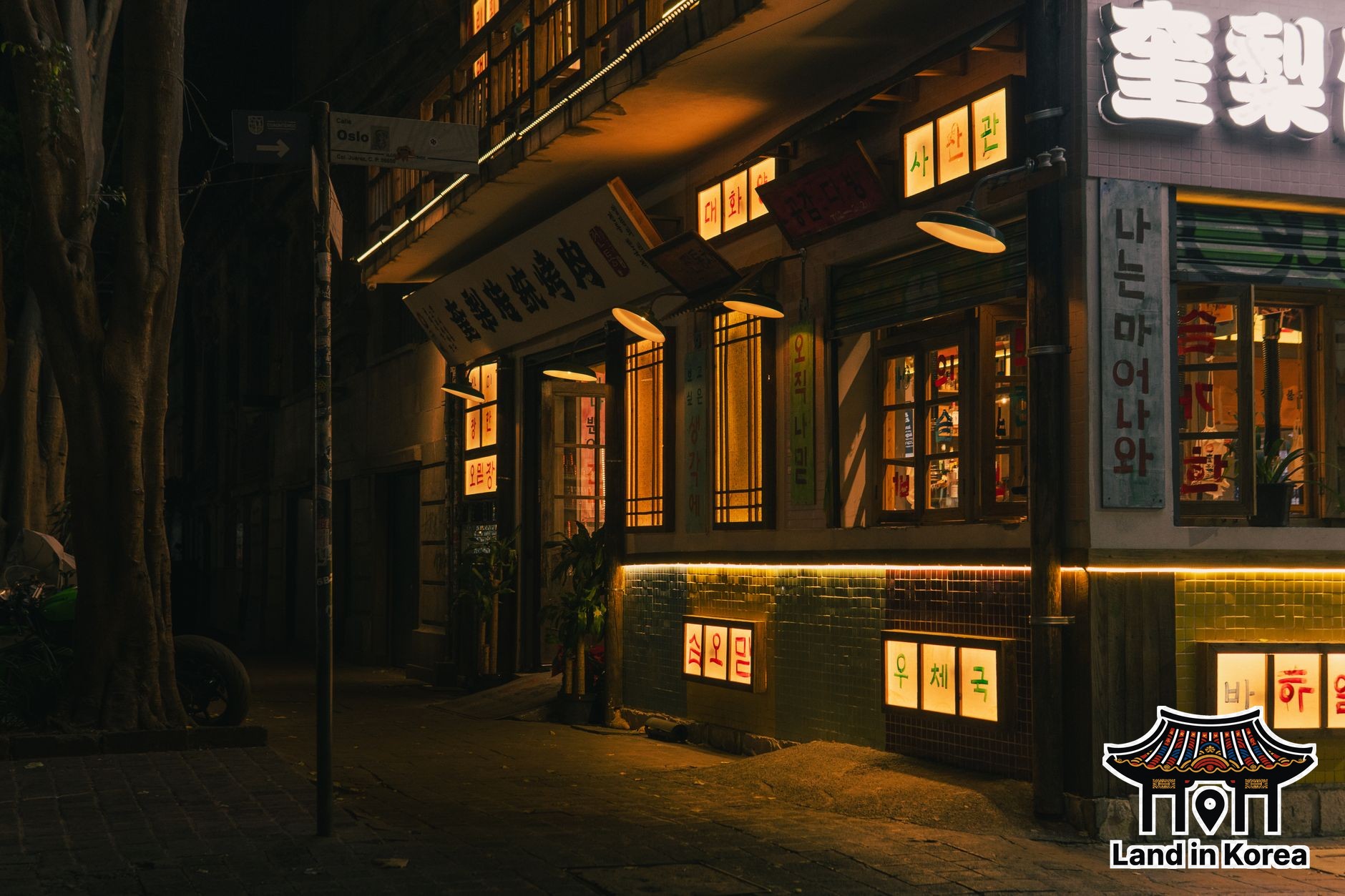
Most self-taught approaches split the alphabet into two sittings: vowels first, since there are fewer of them and most are straightforward single or double lines, then consonants, which benefit from grouping by shape family (several consonants are visually related to how the mouth forms the sound). After that, the actual skill-building happens by reading real things rather than drilling flashcards — menus, subway station names, and store signs are full of loanwords spelled phonetically, which makes them the easiest real-world practice material because you already know what the word sounds like in English.
Where to actually practice once you know the letters
Knowing the alphabet and being able to read fluently are different skills, and the gap closes fastest through repetition on real material rather than more study. The subway map is an obvious one — every station name is right there in both Hangul and romanization, so you can quiz yourself reading the Korean before glancing at the romanized version to check. Convenience store shelves work the same way: snack and drink names are printed in large Hangul, often alongside a product photo that confirms whether you read it correctly. Menu boards at chain restaurants are a step up in difficulty since fewer items are loanwords, but they're also low-stakes practice, since worst case you can still point at a photo.
Two different number systems, not one
Once reading clicks, numbers trip people up next, because Korean uses two separate counting systems depending on context rather than one. Sino-Korean numbers (based on Chinese-origin digits) are used for money, phone numbers, dates, and addresses — exactly the numbers a traveler reads most. Native Korean numbers are used for counting objects, age, and hours on a clock. You don't need fluency in both to get by, but recognizing that a price tag and a "how old are you" question use genuinely different number words avoids a confusing moment the first time it comes up.
It's worth it even for a short trip
The payoff isn't limited to long-term residents — even a one-week visitor who spends an afternoon on the alphabet gets a real, daily return: faster kiosk ordering, less hesitation reading a bus destination board, and the small confidence boost of not feeling fully illiterate in public for an entire trip.
Related guides
Official sources
This guide is checked against Korea Tourism Organization. Prices, hours, and procedures change — confirm time-sensitive details there before you rely on them.
Frequently Asked Questions
What's the most common first-timer mistake with learning to read hangul in a weekend — and why romanized signs still confuse you?
Hangul was designed to be learnable, and that's not a marketing line — it's an alphabet of 24 basic letters assembled into square syllable blocks, and most people can sound out words after a few focused hours.
What should I know before I go?
The payoff is immediate in restaurants and cafes, because a big share of menu items are loanwords written phonetically: 아메리카노 (americano), 치즈 (cheese), 케이크 (cake), 라면 (ramyeon).
Any quick tip to remember?
For everything else, Naver's Papago generally handles Korean better than generic translators and can read text through your phone camera.