
Korea Luggage Storage and Forwarding Services Guide
The coin locker gamble most first-timers lose
Coin lockers at Korean subway stations look like the easy answer — until you actually try to find an empty one on a weekend. The count at each station is fixed, so at busy interchanges and near tourist districts they run out fast on weekends and holidays. The app-based T-Locker system lets you check which stations still have open lockers before you drag your bag there. Treat lockers as a convenience for a few hours, not a guaranteed plan on a tight schedule — have a backup (a staffed counter, or your hotel) in mind.
How subway and KTX lockers actually work
Lockers come in a few size tiers, and even the largest — roughly 50 x 90 x 60 cm — can be genuinely tight for a full-size 28-inch checked suitcase. Payment runs through your T-money card or the T-Locker app (card, bank transfer, or mobile payment); most units don't take cash directly. Access is tied to station operating hours, generally around 05:00 to midnight, so you can't retrieve a bag after the station closes. Lockers also aren't for long-term storage — items left five or more days are automatically removed and relocated.
Staffed counters solve the size problem
Myeongdong, Hongdae, and the area around Seoul Station run staffed luggage storage counters as an alternative to coin lockers. Instead of wedging a suitcase into a fixed-size compartment, you hand it to an attendant and pay a flat daily rate regardless of size — useful for anything oversized that won't fit a locker at all. Hours vary by operator: some run 24 hours, others closer to normal shop hours, so confirm before relying on one for an early or late pickup. These counters cluster near where people spend a day out, a natural fit for a loop through Myeongdong with bags in tow.
Incheon Airport has its own storage system
Both Terminal 1 and Terminal 2 at Incheon run staffed luggage storage counters, not just lockers — at T1 near 3F and 1F entrance 5, at T2 near 3F entrance 4 and 1F entrance 3. Size and item limits apply: carry-on-sized items generally need combined dimensions under about 115 cm, checked-size under about 159 cm, and golf bags, skis, snowboards, surfboards, and food typically aren't accepted. One detail worth planning around: picking up stored luggage from a different terminal than where you dropped it off usually requires a minimum two-night storage period, not same-day. If you're coordinating storage around a transfer, check your airport transfer plan first.
Luggage forwarding turns your last day around
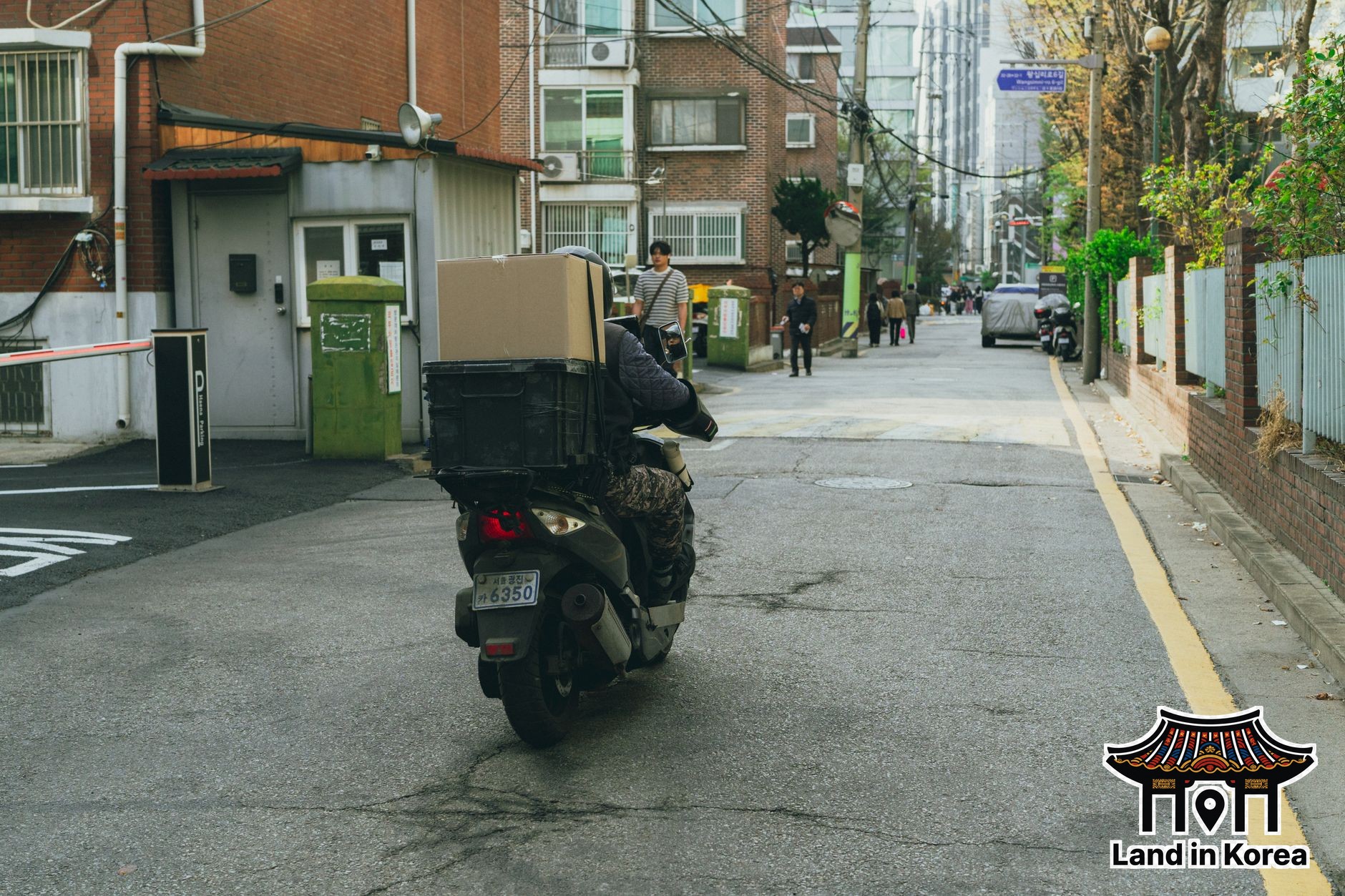
Most travelers drag their bags through their entire last day in Korea without knowing forwarding services exist for exactly that problem. Several companies run same-day luggage delivery across Korea — LuggAgent, Safex, Goodlugg, Zimcarry, and Easy Drop are among the more established names, covering hotel-to-airport, airport-to-hotel, hotel-to-hotel, and in some cases intercity routes between Seoul, Busan, and Jeju. Book through the company's app or a travel booking platform, pick a pickup and drop-off time, and go sightseeing without the bag — it's already at the airport at check-in instead of riding crowded transit with you before an early flight. Same-day requests aren't always guaranteed, so booking a day ahead is the safer move.
Ask your hotel before paying for anything
Many hotels and guesthouses will hold your luggage after checkout at no charge, sometimes for the rest of the day or longer for guests with a later flight. It costs nothing to ask at the front desk before paying for a storage counter or booking a forwarding service. Some hotels also work directly with a forwarding company and can arrange pickup for you — worth asking before you book one yourself.
If a locker session runs out or you lose access
App-based lockers issue a retrieval code or QR code rather than a physical key, so losing your phone or app session mid-trip means station staff have to manually verify and release your bag — worth screenshotting the code as backup. Overstay a locker past the five-day threshold and your items aren't discarded — they're removed and relocated, and you'll need to inquire at the station office to get them back. Recoverable, just not fast.
The short version
- Coin lockers fill up on weekends and holidays — check the T-Locker app first
- Even the largest lockers (~50 x 90 x 60 cm) can be tight for a full-size suitcase
- T-Locker runs on T-money or app payment, not cash at the unit
- Items left five or more days get automatically removed and relocated
- Staffed counters in Myeongdong, Hongdae, and Seoul Station charge a flat daily rate and fit bigger bags
- Incheon Airport has staffed counters at both terminals, with size and item restrictions
- Picking up luggage at a different Incheon terminal usually needs a two-night minimum
- Forwarding services (LuggAgent, Safex, Goodlugg, Zimcarry, Easy Drop) move bags hotel-to-airport same day — book a day ahead
- Ask your hotel first; many hold luggage free after checkout
Official sources
This guide is checked against Incheon International Airport and Korail. Prices, hours, and procedures change — confirm time-sensitive details there before you rely on them.
Frequently Asked Questions
Can I store luggage at Incheon Airport before my flight?
Yes — both terminals have staffed storage counters near specific entrances. Size limits apply (roughly 115 cm combined dimensions for carry-on, 159 cm for checked bags), and items like golf bags, skis, and surfboards usually aren't accepted.
Do Korean subway coin lockers accept cash?
Not directly at the unit. T-Locker runs on T-money card payment or the app itself, which accepts card, bank transfer, or mobile payment.
What happens if I leave my luggage in a locker too long?
After about five days, unclaimed items are automatically removed and relocated by station staff. You'd need to inquire at the station office to retrieve them, which takes longer than a same-day pickup.
Is there a luggage forwarding or delivery service in Korea?
Yes. Companies including LuggAgent, Safex, Goodlugg, Zimcarry, and Easy Drop offer same-day delivery between hotels, airports, and sometimes other cities like Busan and Jeju. Booking a day ahead is safer than counting on a same-day slot.
Will my suitcase actually fit in a subway station locker?
Maybe not. The largest lockers run around 50 x 90 x 60 cm, tight for a full-size 28-inch checked suitcase. A staffed storage counter, which charges a flat daily rate regardless of size, is the more reliable option for larger luggage.
Will my hotel hold my luggage after I check out?
Often, yes, and usually for free — ask at the front desk before paying for outside storage or a forwarding service. Some hotels can also arrange pickup through a forwarding company directly.