
National Museum of Korea in Seoul - A First Visit Guide
Tap a heading to read that section.
What to know before visiting
The National Museum of Korea makes a practical stop when you want a deeper look at Korean history without trying to pack another palace into the day. Its permanent galleries are free, Ichon Station is nearby, and the museum stays open later on two evenings each week. A little planning matters, though: the whole museum is not always available on the same schedule, and special exhibitions can have their own charges or arrangements.
Start with the right station
The museum is at 137 Seobinggo-ro in Yongsan-gu, Seoul. The museum directs visitors to Ichon Station on Subway Line 4 or the Gyeongui-Jungang Line. From Exit 2, follow the signs toward Yongsan Family Park; its directions give a 150-metre walk in that direction. There is also an underground passage called Museum Nadeulgil linking Ichon Station and the museum area.
For step-free planning, the museum says an elevator is available in the direction of Exits 1 and 2. Allow yourself some extra time for the station and grounds rather than treating the station exit as the gallery entrance. If you are coming from another part of Seoul, check the route and any service notices before leaving; the useful transfer depends on where your journey starts.
What is free, and what might cost extra?
Admission to the permanent exhibition halls is free. The museum also lists its Children's Museum and free special exhibitions as free, while charges apply to paid special exhibitions. That distinction is useful when you see a prominent exhibition banner: a ticket price for a temporary show does not mean you must buy that ticket to visit the permanent galleries.
Check the museum's current exhibition page before you go if a particular show is the main reason for your trip. Temporary exhibitions change, and availability or booking arrangements can differ. For a first visit without a fixed exhibition in mind, the permanent collection is a reasonable starting point; you can decide on a special show separately after checking its details.
Choose your day before choosing your route
The museum lists regular indoor hours of 9:30 a.m. to 5:30 p.m. on Monday, Tuesday, Thursday, Friday and Sunday, and 9:30 a.m. to 9 p.m. on Wednesday and Saturday. Last admission is 30 minutes before closing. The outdoor exhibition area has a different schedule, listed as 7 a.m. to 10 p.m.
Do not assume that every Monday is a closure day. The museum lists the first Monday of March, June, September and December as regular gallery closure dates, with exceptions possible. It also lists January 1, Lunar New Year's Day and Chuseok as museum closure days. Because holiday dates and special arrangements change, check the official visitor information for your exact date rather than copying an old itinerary. December 7, 2026 falls on the first Monday of December; check the museum’s current notice for any exception.
Wednesday and Saturday evenings are useful if your day is already committed to another neighbourhood. Arriving near closing leaves less time than the opening-hours headline suggests, however, so check last admission and leave room to get from the station to the galleries.
A manageable plan for a first visit
The museum is large enough that trying to read every label can become tiring. Choose a small number of galleries that match your interests and give those more attention instead of treating the whole building as a checklist. Pick up or download the museum's English guidebook before deciding where to start, and check the floor map when you arrive. If something catches your attention, leave yourself permission to spend longer there and save the rest for another visit.
The museum publishes a highlights tour for international visitors in English, Chinese and Japanese. Its listed schedule can change monthly, so use the current guided-tour page rather than assuming a particular session will run. If you want the tour, check the language, meeting point and time first, then build the rest of your visit around it.
Visiting with children or mobility needs
The Children's Museum uses timed sessions. The museum says visitors with reservations should present their confirmation, so check availability and booking details before promising a child a specific session. Free entry does not mean you can assume an unreserved slot will be available at the time you arrive.
The visitor information also lists free wheelchair and stroller loans in the Great Hall, with a stated weight limit for strollers. If a particular facility is essential to your visit, contact the museum in advance about availability. Lockers and coat storage are listed as well; check the posted instructions on arrival before leaving anything valuable.
Photos, bags and a quiet visit
The museum asks visitors not to touch objects, run or speak loudly in the galleries. Its published visitor rules prohibit photography using flash, a tripod, selfie stick or gimbal, and say commercial photography requires advance written permission. Pay attention to any additional signs in a particular exhibition, since an individual display may have further restrictions.
Food and drinks are prohibited under the published visitor rules, so finish snacks before entering the galleries and follow staff guidance about storage. Silence your phone and be considerate of people viewing the objects. If you have a large bag, ask staff where to store it rather than assuming you can carry it into every exhibition.
Before you leave for Ichon
Check three things on the museum website: that the galleries you want are open on your date, whether a special exhibition needs a paid ticket, and whether a guided tour or children's session needs planning. Keep the official visitor information and subway directions handy; hours and services can change.
The museum's Korean and English information number is +82-2-2077-9046. For the rest of your trip, our Seoul subway guide explains how to read exit numbers and plan transfers, while our Monday closures guide helps you check another sightseeing day.
Frequently asked questions
Is admission to the National Museum of Korea free?
The permanent exhibition halls and Children's Museum are free. Some special exhibitions charge a separate admission fee, so check the event details before booking.
Which subway station should I use for the museum?
Use Ichon Station on Line 4 or the Gyeongui-Jungang Line and follow the museum's directions from Exit 2. An underground passage also connects the station and museum area.
Can I visit the National Museum of Korea on a Monday?
Usually, yes. The permanent and special galleries close on the first Monday of March, June, September and December, with possible exceptions. The museum also lists New Year's Day, Lunar New Year's Day and Chuseok as closure days. Check the official notice for your date.
Official sources
- National Museum of Korea: Visitor information and viewing hours
- National Museum of Korea: Directions
- National Museum of Korea: Guided tours
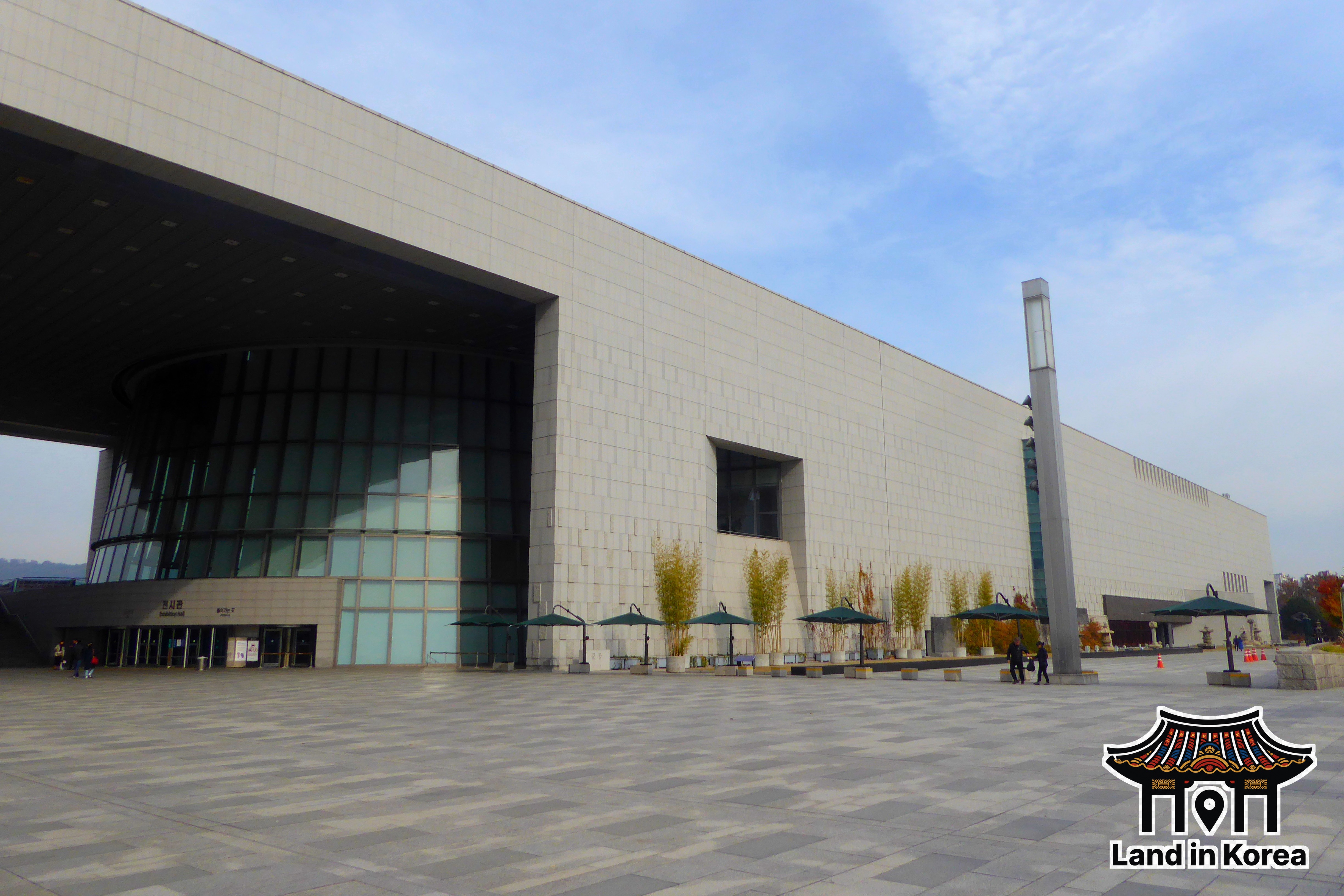
Photo: Ethan Doyle White / Wikimedia Commons, CC BY-SA 4.0. Watermark added; adapted image is shared under the same license.
A few details. A better trip.
Compare eSIM reference prices, explore arrival airports and choose a neighbourhood. Check current offers on each provider’s website.