
Korea Trash and Recycling Rules for Residents Guide
The mistake that leaves your trash sitting on the curb
Sorting recyclables isn't what actually trips people up in Korea — it's using the wrong bag. General waste has to go into an official, district-specific bag (종량제 봉투), and a bag bought in the wrong district isn't accepted even if it looks identical, because the collection fee is built into that bag's price rather than charged separately. Collectors leave mismatched bags right where you put them. This catches foreign residents and short-term renters far more than tourists in hotels, since nobody hands you the local bag with your apartment key — and the bag you used in your last neighborhood is worthless the moment you move to a new district.
Where to actually buy the right bag
Jongnyangje bags are sold at convenience stores and supermarkets inside the district (구) they're printed for — look for the district name and price printed directly on the bag. They come in a range of sizes, from small ones for a single person's kitchen trash up to large ones for bigger households, so buying the size you actually fill regularly beats letting one oversized bag sit half-full for a week. If you've just moved, ask at the nearest convenience store counter which bag your building's district uses; staff field this question constantly. See convenience store basics for more on what these stores handle beyond snacks.
Food waste runs on a completely separate system
Food waste in Korea is never combined with general trash — it runs through its own system, often an RFID-weighed communal bin that charges by weight, or a separate designated food-waste bag depending on the building. The simple test for what counts: if an animal could safely eat it, it's food waste. Bones, shellfish and crab shells, eggshells, and the papery skins of onions and garlic are common exceptions that go in general waste instead, and some districts also exclude teabags and coffee grounds — checking your building's posted rules beats guessing. Apartment complexes usually have a dedicated food waste station right next to the general trash and recycling point.
Recyclables get sorted by material, not bagged together
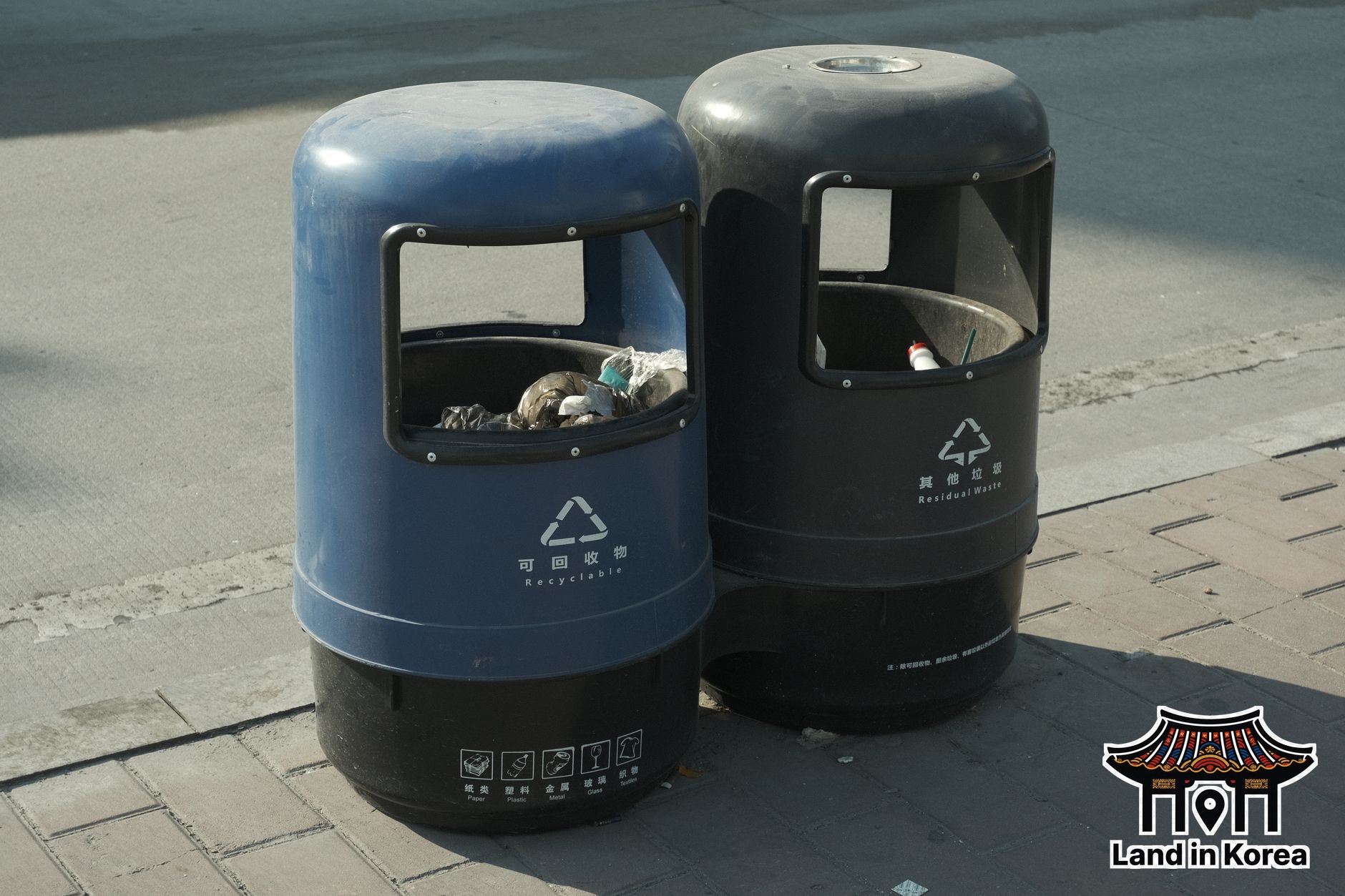
Recyclables are sorted by material — paper, plastic, glass, cans, and styrofoam each have their own container — at a shared collection point near the building entrance, not mixed into one bag the way curbside recycling works in some countries. Rinse containers before tossing them; leftover food residue is one of the most common reasons a bag of "recyclables" gets rejected and treated as general waste instead. Collection for recyclables and general trash runs on set days per week rather than daily, usually posted on a sign at the collection point or announced by building management. Putting bags out on the wrong day just means they sit there until the next scheduled pickup.
Furniture and appliances need their own sticker
Anything too large for a standard bag — furniture, mattresses, refrigerators, washing machines, air conditioners — counts as bulky waste (대형폐기물) and can't just be left on the curb. Register the item online through your district office's website, or in person at your local 동주민센터 (community service center), specify the item type and size, and pay a fee set per item rather than by weight, with small items running cheaper than large appliances. Attach the sticker or printed receipt you're given to the item before putting it out on the date and spot specified. Skipping this step and leaving furniture on the street is treated as illegal dumping, not a simple oversight.
Clothes, batteries, and electronics don't go in the regular bins
Used clothing, shoes, bags, and blankets in reusable condition go into the green clothing donation bins (의류수거함) around most residential areas — but only if they're dry and undamaged; stained or torn items, stuffed bedding, and pillows generally aren't accepted and should go in general waste instead. Batteries never go in the trash; drop them at the small battery collection boxes usually found at community centers, subway stations, or your apartment's recycling area. Larger electronics and appliances can qualify for a free nationwide pickup service (e-순환거버넌스, bookable online or by phone) instead of the paid bulky-waste sticker, though some districts require bundling several small items to qualify for a visit.
What actually happens if you get it wrong
Bags that don't match your district, or trash left outside a bag entirely, generally just get skipped by collectors and left where you put them — its own problem in a shared building. Beyond that, Korea's waste rules carry real fines for improper disposal and illegal dumping, and enforcement leans heavily on the CCTV that covers most collection points. Penalties are known to escalate for repeat violations rather than staying flat. Exact amounts differ by district and by what's involved — mixing food waste into general trash, skipping the bulky-waste sticker, or dumping outside a collection point are treated differently — so check your gu office's site for current figures rather than assuming a fixed number.
The short version
- Use the 종량제 bag printed for your specific district — bags from elsewhere aren't accepted
- Buy bags at local convenience stores and supermarkets, sized to how much trash you actually produce
- Food waste is separate from general trash, usually weighed by RFID or bagged on its own
- Bones, shellfish shells, eggshells, and onion or garlic skins go in general waste, not food waste
- Recyclables are sorted by material at a shared point, not bundled into one bag — rinse containers first
- Furniture and appliances need a registered bulky-waste sticker from your district office before you put them out
- Clothes in good condition go in green donation bins; batteries and electronics have their own separate drop-off points
- Fines for improper disposal are real and escalate with repeat violations — check your district office for exact numbers
Official sources
This guide is checked against Seoul Metropolitan Government. Prices, hours, and procedures change — confirm time-sensitive details there before you rely on them.
Frequently Asked Questions
What happens if I use the wrong trash bag in Korea?
It won't get collected. General waste bags are district-specific, and a bag from a different district isn't accepted even if it looks identical, because the collection fee is built into that bag's price.
Where can I buy 종량제 bags?
At convenience stores and supermarkets inside your own district — the district name and price are printed on the bag, and staff can point you to the right one if you're unsure.
Does food waste really need its own bin?
Yes. It's never combined with general trash, usually running through an RFID-weighed bin or its own bag. Bones, shellfish shells, eggshells, and onion or garlic skins are common exceptions that go in general waste instead.
How do I throw away a couch or refrigerator in Korea?
Register it as bulky waste (대형폐기물) online through your district office or in person at your local 동주민센터, pay a per-item fee, and attach the sticker or receipt you're given before putting it out — you can't just leave it on the curb.
Where do I recycle old clothes, batteries, and electronics?
Clothes and blankets in good condition go into green clothing donation bins. Batteries go into small collection boxes at community centers or subway stations. Larger electronics can qualify for a free pickup service instead of a paid bulky-waste sticker.
What's the fine for illegal dumping or using the wrong bag in Korea?
There's a real fine that escalates for repeat violations, but the exact amount depends on your district and what rule was broken — check your local gu office's site for the current figure.