
Korea Convenience Store Hacks Every Traveler Needs
The one thing most tourists never realize
Most first-time visitors treat CU, GS25, and 7-Eleven as backup snack stops between meals, which undersells what's actually behind the counter. In one visit you can withdraw cash, top up a transit card, ship a parcel, print a document, and pick up basic medicine — services a lot of tourists never discover until they've already asked a hotel front desk for help with something the store around the corner could have handled directly. All three chains run thousands of locations and stay open 24 hours almost everywhere, making them one of the most reliably available service points in the country.
Breakfast is at the counter, not a restaurant
The cheapest breakfast in Korea isn't a restaurant — it's the convenience store counter most tourists walk straight past. Coffee and toast or sandwich combos are a fast, cheap option when nothing else is open early, and most locations have a microwave and a hot-water dispenser at the counter or a small seating area, so instant noodles and heat-and-eat meals are ready in a couple of minutes. It's the same reason locals lean on these stores between meetings or after a late shift — nothing needs a reservation and nothing takes long, which makes it a good fallback for an early start before a sight like Gyeongbokgung Palace opens.
Topping up a T-money card
CU, GS25, and 7-Eleven all sell and recharge T-money transit cards: hand the card to the cashier, say how much to add, and they tap it on a small reader at the register. The catch is that reloading is a cash-only transaction — no credit or debit card, foreign or domestic, at the counter. Keep some won on hand for this, since running out of transit balance is one of the more common small frustrations for visitors relying on subways and buses.
Using the ATM without getting surprised by fees
Not every machine inside a CU or GS25 accepts foreign cards — look for a "Global ATM" sticker before you insert anything. Even on machines that do, expect a withdrawal fee noticeably higher than a bank ATM charges, and a lower per-transaction limit. If the screen offers to convert the withdrawal into your home currency instead of KRW, decline it — that's a currency conversion markup, not a convenience. Choose KRW and let your own card issuer handle the exchange rate; see currency and card payments in Korea.
Basic medicine when the pharmacy's closed
Many locations sell single-dose over-the-counter medicine — painkillers, cold and allergy tablets, basic first-aid items — since Korean pharmacy hours can be limited, especially at night or on holidays. Selection is basic and prices aren't discounted, but it's a genuine option when you need something small and the nearest pharmacy is closed. For anything more serious, check emergency numbers and 24-hour pharmacies before you need them, not after.
Shipping a parcel without finding a post office
CU and GS25 both run their own domestic parcel services at the counter, so you can ship a box without tracking down a post office. Staff weigh and price the package on the spot, and some services let you choose store-to-store delivery, where the recipient picks the parcel up at a specific branch instead of waiting for a home delivery. It's a practical way to send souvenirs ahead or ship something home before checkout instead of hauling it through the airport — for larger loads, compare it against luggage storage and forwarding services.
Printing documents and paying bills
Many CU and GS25 branches have a self-service multi-function kiosk near the entrance that prints from a USB drive or a mobile app — the easiest fix if you need a boarding pass or reservation confirmation printed and your hotel has no printer at the desk. The same counters typically handle bill payment for utilities or phone bills, which matters more if you're staying longer term than passing through for a week.
The discount stickers worth knowing
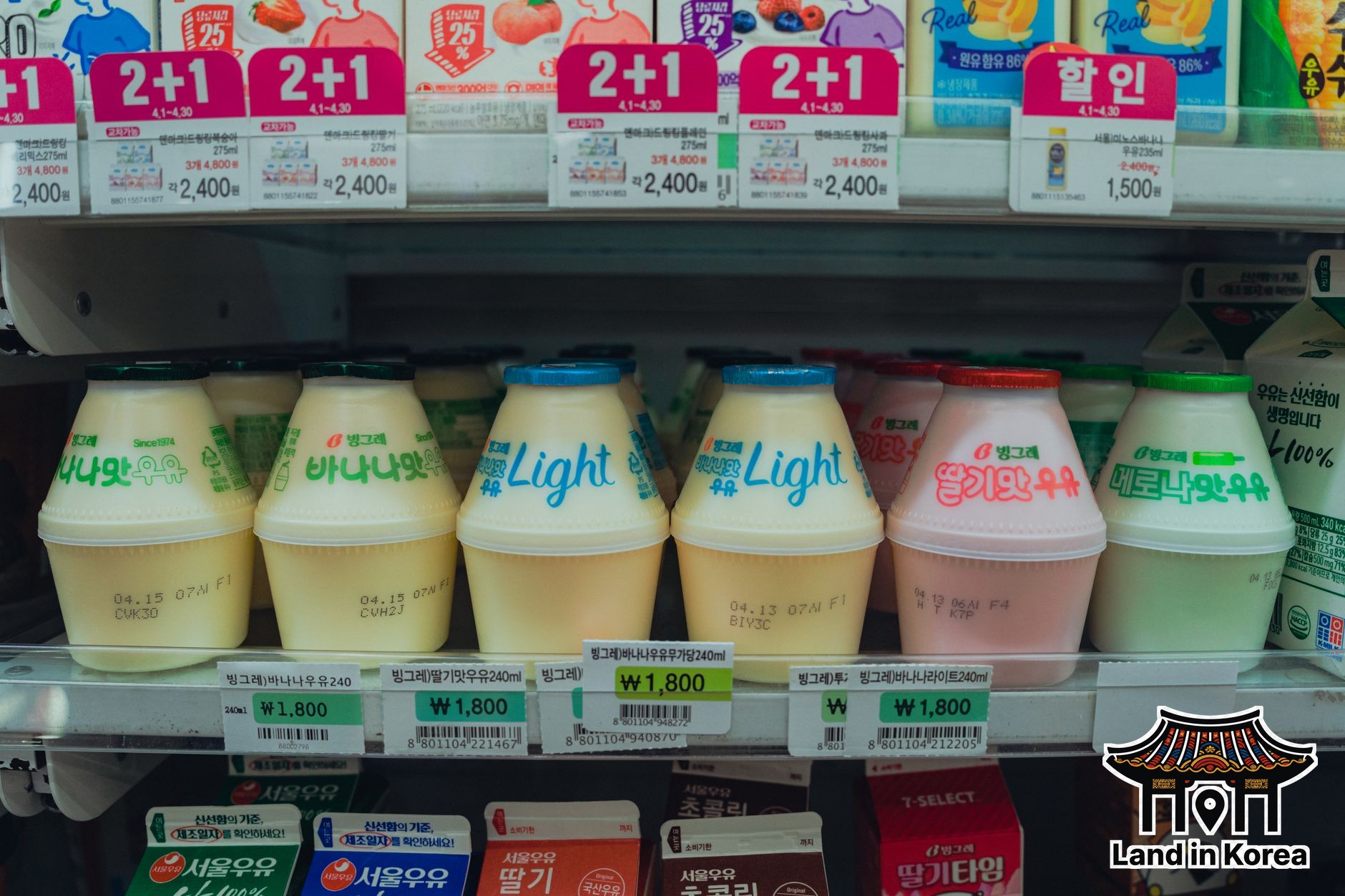
Look for "1+1" or "2+1" stickers on the shelf edge — they mean buy one, get one free, or buy two, get a third free, and they're a genuine bundle discount, not a markdown on stock that's about to expire. These rotate frequently across drinks, snacks, and instant food, so it's worth a quick scan of the fridge case before you buy anything individually. Over a multi-day trip making a habit of checking for the sticker before grabbing a drink adds up to real savings for basically no extra effort.
The short version
- CU, GS25, and 7-Eleven function as 24-hour mini service hubs, not just snack stops
- Coffee-and-toast counter combos and microwave/hot-water access make them the cheapest breakfast option
- T-money recharges are cash-only at the counter — no card payment for reloads
- ATM withdrawals need a "Global ATM" sticker for foreign cards, cost more than bank ATMs, and should always be charged in KRW, never your home currency
- Basic single-dose medicine is available when pharmacies are closed, though selection is limited
- CU and GS25 offer counter parcel shipping, including store-to-store pickup delivery
- Self-service kiosks at many branches print documents and handle bill payments
- 1+1 and 2+1 shelf stickers are real bundle discounts worth checking before every purchase
Official sources
This guide is checked against Korea Tourism Organization. Prices, hours, and procedures change — confirm time-sensitive details there before you rely on them.
Frequently Asked Questions
Can I pay bills at a Korean convenience store?
Yes — many CU and GS25 branches have a self-service kiosk that handles bill payment for things like utilities or phone bills, alongside document printing.
Can I top up my T-money card with a credit card at a convenience store?
No. Recharging a T-money card at the counter is a cash-only transaction, even with a Korean-issued credit or debit card.
Do convenience store ATMs accept foreign cards?
Only machines marked with a "Global ATM" sticker. Even then, expect a higher withdrawal fee and a lower per-transaction limit than a bank ATM, and always choose to be charged in KRW rather than your home currency.
Can I ship a package from a CU or GS25?
Yes. Both chains run their own domestic parcel counter services, including a store-to-store option where the recipient picks the package up at a specific branch instead of a home delivery.
Can I buy medicine at a Korean convenience store?
Basic single-dose items like painkillers and cold medicine are usually available, which helps when pharmacy hours are limited, but the selection is basic compared to an actual pharmacy.
What do the 1+1 and 2+1 stickers mean?
They're genuine bundle discounts — buy one get one free, or buy two get a third free — not a clearance markdown, and they rotate often across drinks and snacks.