
Money in Korea: Cash, Cards & Currency Exchange (2026)
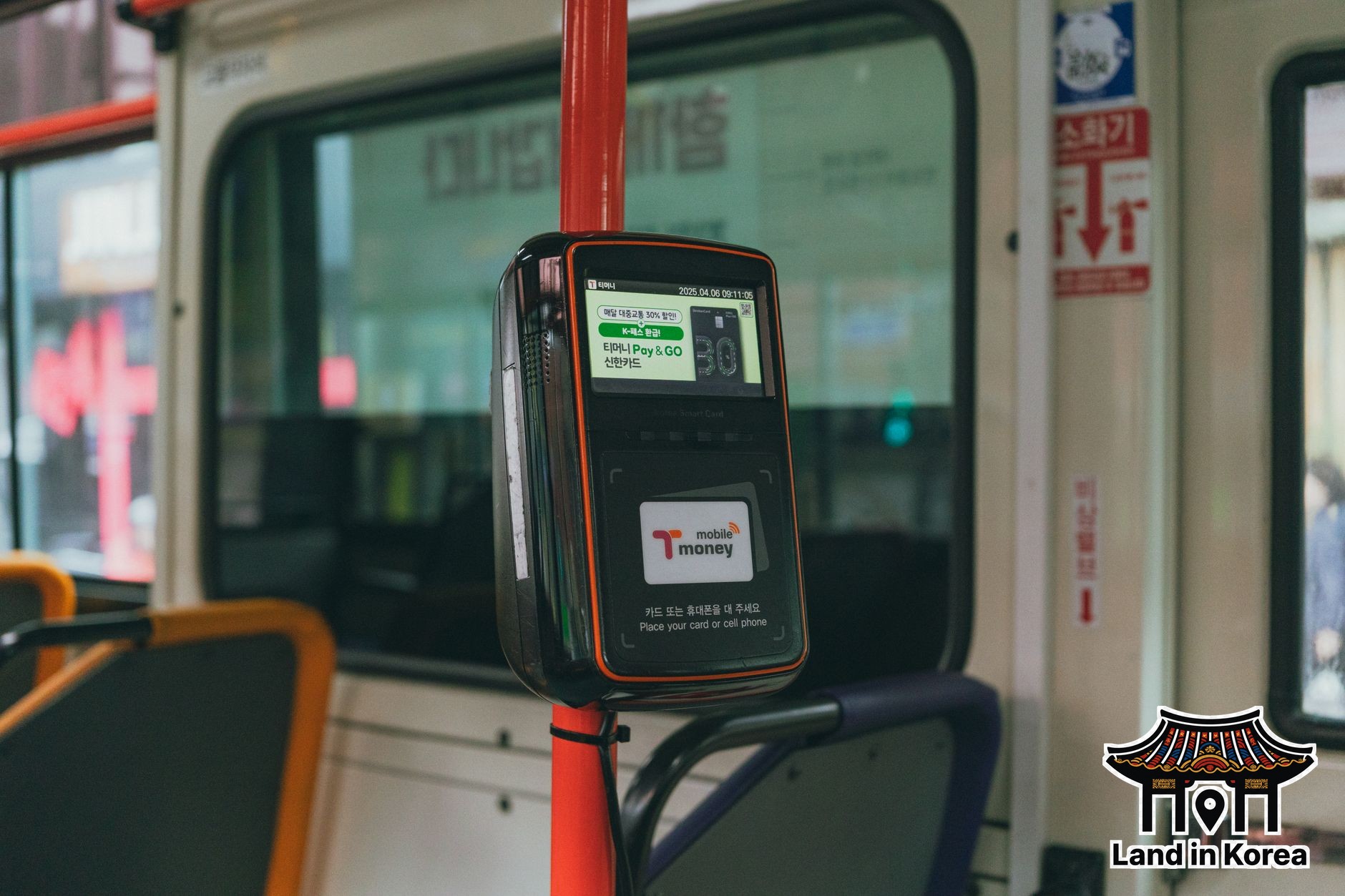
Korea is primarily a card-based society, but cash still matters. Understanding the payment ecosystem before arrival saves you stress, fees, and confusion.
This guide breaks down currency, exchange rates, which payment methods work where, and exactly how much cash you should carry.
The Korean Won (₩ or 원)
Korea's currency is the Korean won, abbreviated ₩ or 원 (won in Korean).
Current exchange rates (as of 2026):
- 1 USD = approximately 1,200-1,300 won
- 1 EUR = approximately 1,400-1,500 won
- 100 JPY = approximately 900-1,000 won
(Exchange rates fluctuate daily. These are approximate.)
Denominations:
- Coins: 10₩, 50₩, 100₩, 500₩ (increasingly unused; 10-50₩ coins are rare)
- Bills: 1,000₩, 5,000₩, 10,000₩, 50,000₩, 100,000₩
Most prices you encounter will be in thousands: a coffee is 4,000₩ (not 4 won).
Getting Cash: ATMs vs. Currency Exchange
ATMs (Best Option)
Using an ATM is your best source for Korean won. You get real exchange rates with minimal fees. Every convenience store, subway station, and bank has an ATM.
How to use:
- Find an ATM (look for signs: 신용카드, 은행 ATM, or simply ATM)
- Insert your debit card (credit card cash advances typically have fees)
- Select your language (English usually available)
- Choose "withdrawal" or "출금"
- Enter amount (in won, not your home currency)
- Accept the exchange rate offered
- Receive cash
Typical ATM fees:
- Your home bank may charge a "foreign ATM fee" ($2-5 USD per withdrawal)
- The Korean bank may charge a small fee (1,000-2,500 won, approximately $1-2 USD)
- Total per withdrawal: usually 3,000-7,000 won in fees
To minimize fees:
- Withdraw larger amounts at once ($300-500 USD) rather than multiple small withdrawals
- Use ATMs that don't charge (some Korean banks have international partner agreements)
- Ask your home bank which Korean banks have fee agreements
Best ATM locations:
- Convenience stores (ubiquitous, open 24/7)
- Subway stations
- Banks (fewer locations but reliably available)
- Shopping centers
Currency Exchange Offices
Currency exchange offices exist (환전소) but have higher fees than ATMs.
Exchange fees: 2-5% markup on the exchange rate (noticeably higher than ATM)
When to use:
- Airport arrival and you need cash immediately before finding an ATM
- You're carrying large amounts of foreign currency
- You prefer direct currency conversion over withdrawals
Where to find:
- Incheon Airport (multiple locations, open 24/7)
- Central Seoul (Gangnam, Jongno, Myeongdong)
- Tourist-heavy areas
Recommendation: Use ATMs. Exchange offices should be a backup only.
Cash vs. Cards: Which to Use When
Cards (Preferred Increasingly)
Korea is remarkably card-friendly. Credit and debit cards work almost everywhere.
Where cards always work:
- Restaurants (regular and fine dining)
- Convenience stores (GS25, CU, Emart24, etc.)
- Department stores and shopping malls
- Hotels
- Coffee shops
- Supermarkets
- Taxis (many, but not all)
- Subway ticket machines (some locations)
Card advantages:
- No cash exchange fees
- Better exchange rates (your bank's rate vs. airport rate)
- Safer (no theft risk)
- No carrying bulky bills
- Easy to track spending
International card fees:
- Foreign transaction fee: typically 1-3% of purchase (charged by your bank)
- ATM withdrawal fee: $2-5 USD per withdrawal (varies by bank)
Which card to use: Bring both a credit card and a debit card. Credit cards have better fraud protection but charge foreign transaction fees. Debit cards have lower fees but less protection.
Cash (Still Useful)
Some places don't accept cards, and cash is sometimes preferred.
Where cash is essential:
- Street food vendors (some accept mobile payment, but cash is safer)
- Small mom-and-pop restaurants
- Barber shops
- Laundromats
- Parking meters (some)
- Temple donations
- Taxis (many drivers still only accept cash)
Cash advantages:
- No transaction fees
- Faster at small vendors
- Required when places don't accept cards
- Better for tipping-unfriendly vendors (though tipping isn't customary)
Recommended cash to carry:
- Short visit (3-5 days): 100,000-150,000 won ($75-115 USD)
- Medium visit (1-2 weeks): 200,000-300,000 won ($150-230 USD)
- Longer visit: Whatever you're comfortable carrying; ATMs are everywhere
Cash safety: Don't carry all cash in one place. Split between wallet, hotel safe, and hidden pocket. Korean pickpockets do exist in crowded areas.
Paying with Foreign Credit Cards
Your foreign credit cards work in Korea, but understand the fees.
Visa and Mastercard: Universally accepted American Express: Less common; have a backup card Discover: Rarely accepted; essentially useless in Korea
When paying with cards:
- Vendor processes your card through their reader
- Pin pad appears (if debit) or you sign (if credit)
- Transaction completes immediately
- No currency conversion confusion; exchange rate automatically applied
Foreign transaction fee: Typically 1-3%. This is unavoidable; it's charged by your bank, not the Korean merchant.
Tips to minimize fees:
- Use the same card for all purchases (fewer transactions = fewer fees)
- Pay in Korean won, not your home currency (if offered option)
- Avoid ATM cash advances (higher fees than debit withdrawals)
Digital Payment Systems in Korea
Korea has advanced mobile payment systems that even foreign visitors can use.
Apple Pay and Google Pay
If your phone supports Apple Pay or Google Pay, you can add your international credit card and pay contactless in Korea.
Where it works: Anywhere contactless payment is accepted (increasingly common but not universal)
Advantages: Fastest, safest, no physical card needed
Naver Pay and Kakao Pay
These are Korean payment apps (similar to Venmo or Apple Pay). You'd need a Korean bank account or credit card to fully use them, but some foreign cards link to them.
Recommended: Set up if staying longer than 2 weeks; otherwise, stick with cards.
Daily Budget Breakdown
How much should you budget per day in Korea?
Budget traveler (hostels, street food, public transit):
- Hostel: 25,000-40,000 won ($18-30 USD)
- Food: 20,000-30,000 won ($15-22 USD) per day
- Transit: 5,000-10,000 won ($4-7 USD) per day
- Activities: 20,000-40,000 won ($15-30 USD)
- Total: 70,000-120,000 won per day ($52-90 USD)
Mid-range traveler (3-star hotel, regular restaurants, tourist activities):
- Hotel: 80,000-150,000 won ($60-110 USD)
- Food: 40,000-60,000 won ($30-45 USD) per day
- Transit: 5,000-10,000 won ($4-7 USD) per day
- Activities: 30,000-60,000 won ($22-45 USD)
- Total: 155,000-280,000 won per day ($115-210 USD)
Luxury traveler (5-star hotel, fine dining):
- Hotel: 200,000-400,000 won+ ($150-300 USD+)
- Food: 80,000-150,000 won ($60-110 USD) per day
- Transit: negligible (taxis and private cars)
- Activities: 100,000-200,000 won ($75-150 USD)
- Total: 380,000-750,000 won per day ($280-560 USD)
Practical Money Tips
Tip 1: Buy a T-money card for all transit and some retail Load 20,000-50,000 won onto a T-money card immediately. Use it for all subways, buses, and convenience store purchases. Costs only 2,500 won for the card.
Tip 2: Compare ATM withdrawal vs. card payment For a 20,000 won purchase:
- ATM withdrawal + pay in cash: costs 1,500-3,500 won in fees (ATM fee absorbed)
- Pay with card: costs 200-600 won in foreign transaction fees
Card payment is often cheaper for single purchases.
Tip 3: Withdraw larger amounts fewer times Withdraw 300,000-400,000 won at a time instead of 50,000 won multiple times. You pay fees per withdrawal, not per transaction amount.
Tip 4: Watch your daily withdrawal limit Most banks limit ATM withdrawals to 300,000-1,000,000 won per day. Check with your bank before arrival.
Tip 5: Notify your bank of travel Tell your bank you're traveling to Korea. Unexpected international charges sometimes trigger fraud blocks.
Related guides
- Getting your tax refund before you fly out
- T-money card basics
- Convenience stores double as ATMs
- Your first money decisions at the airport
Official sources
This guide is checked against Korea Tourism Organization. Prices, hours, and procedures change — confirm time-sensitive details there before you rely on them.
Frequently Asked Questions
Should I exchange currency at home or wait until Korea?
Wait until Korea. ATM exchange rates are better than pre-travel exchange rates. You'll get 2-5% more Korean won per dollar by withdrawing at an ATM in Korea vs. exchanging at your home bank. Only exception: if your bank charges excessive ATM fees, it might be cheaper to exchange at home.
Do I need cash if I'm carrying credit and debit cards?
Having at least some cash (50,000-100,000 won) is smart as backup. Most places accept cards, but some street vendors, small restaurants, and taxis prefer or require cash. A cushion of cash prevents problems if a card is declined or lost.
What's the best card to bring to Korea?
Bring both a credit card (better fraud protection) and a debit card (lower fees). Use debit for ATM withdrawals and credit for store purchases. Visa and Mastercard are most widely accepted.