
DMZ and JSA tours - What First-Timers Actually Need to Know
Some links are affiliate links. We may earn a commission at no extra cost to you. How affiliate links work.
Tap a heading to read that section.
The mix-up that trips up most first-time bookings
A DMZ tour and a JSA (Joint Security Area/Panmunjom) tour get blurred together in most search results, but they're not the same trip, and booking the wrong one is the most common mistake first-timers make. A DMZ tour stays within the buffer zone itself — tunnels, an observatory, a symbolic train station — and can usually be booked a day or two out. A JSA tour goes into the actual shared compound straddling the Military Demarcation Line, involves a background check through the operator and the UN Command, and needs to be locked in well before you land.
What a standard DMZ tour actually covers
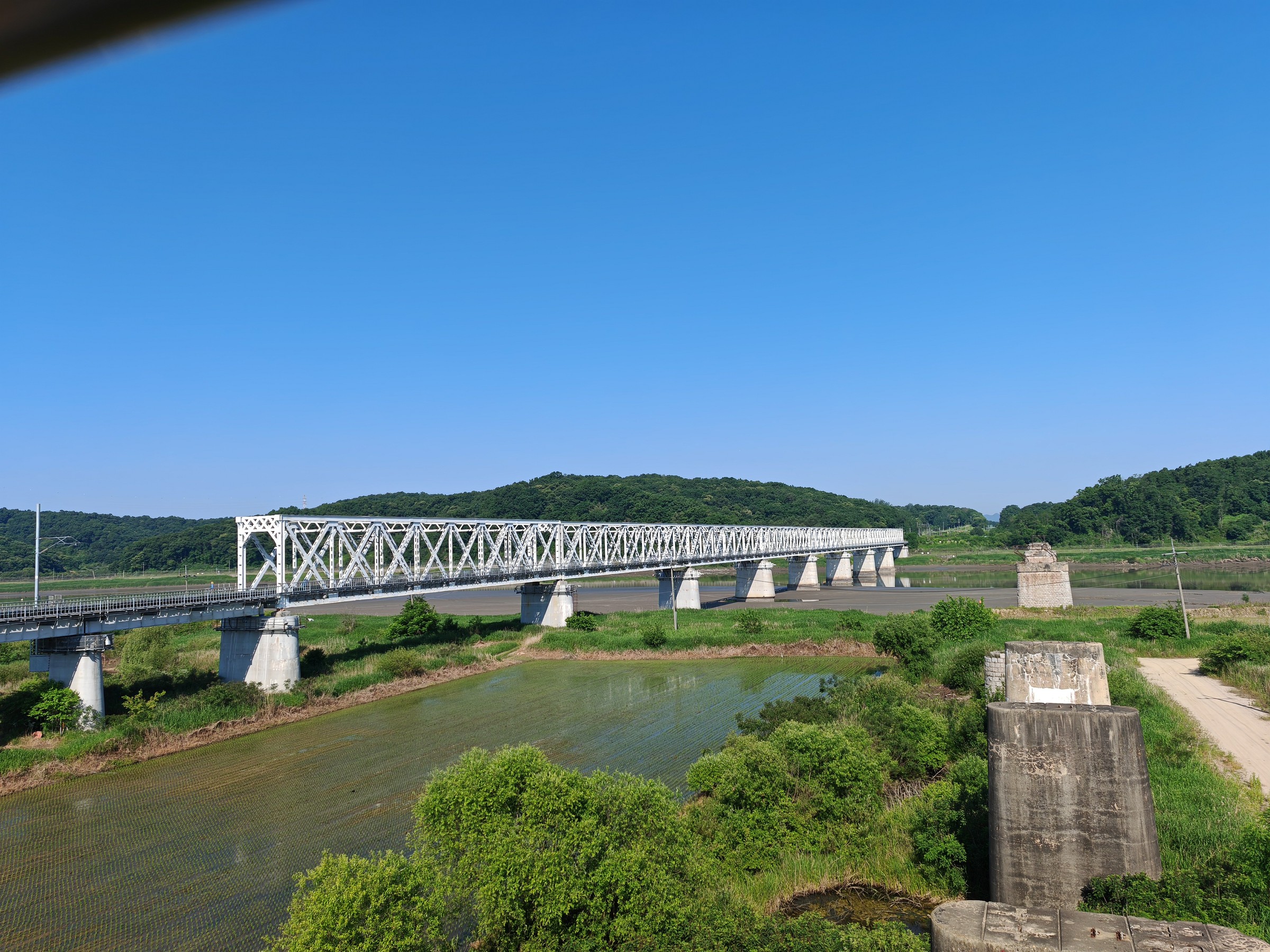
Most DMZ day tours from Seoul gather at Imjingak Peace Park, then move through a set circuit: the Third Infiltration Tunnel, Dora Observatory, and Dorasan Station. The Third Tunnel was discovered running under the border in 1978, stretches roughly 1.6 km, and reaches about 73 meters underground — visitors walk down into it wearing a hard hat provided at the site. Dora Observatory looks directly across the buffer zone into North Korean territory, with binoculars along the viewing deck. Dorasan Station is the more symbolic stop: built as the last station on the South Korean side toward Pyongyang, it's functional but sees no regular passenger service north. Tours typically leave by bus from central Seoul, take 1-1.5 hours to drive north, and run 4-8 hours door to door depending on tier and whether lunch is included. The tunnel walk involves stairs and a low ceiling in sections.
What a JSA tour adds — and why it's a different trip
The JSA was established at Panmunjom after the 1953 Armistice Agreement was signed there, and it's still the only spot where South and North Korean forces stand face to face. The blue conference buildings inside the compound straddle the Military Demarcation Line, and on a JSA tour you're taken inside one of them, where the line runs across the floor — for a few minutes, you're technically standing on the north side under UN Command escort. It's a site with real history behind the tension: in 1976, North Korean soldiers killed two U.S. Army officers overseeing a tree-trimming detail in the JSA, an incident that led to a major show-of-force operation days later. A JSA tour runs longer overall than a standard DMZ tour once transport and the security briefing are factored in, though the time actually spent inside the compound is brief. Expect to pay more for it too, since the JSA security processing and the UN Command escort add cost.
What DMZ and JSA tours cost
The prices below are listed by tour operators and aggregator sites, not prices Land in Korea booked and confirmed directly. They shift with season, group size, fuel costs, and what's included, so use them as a budgeting map rather than a quote.
| Tier | What it covers | Listed price per person |
|---|---|---|
| Budget | Half-day DMZ only (3rd Tunnel, Dora Observatory, a DMZ museum), no JSA | 50,000-60,000 won (late October 2026, several operator listings); one aggregator lists 45,000-65,000 won, about $35-50 (accessed 2026-10-31) |
| Standard | Full-day DMZ with lunch, no JSA | 70,000-95,000 won (late October 2026, several operator listings) |
| JSA | Full day combining DMZ, JSA, and the Third Tunnel | 96,000-135,000 won (late October 2026, several operator listings) |
| JSA, lower listings | JSA Museum + DMZ combination, DMZ with suspension bridge and observatory, KKday DMZ day trip | About $44, $47, and $47.40 (accessed 2026-10-31) |
| Premium | Small-group or specialist-led JSA tours, one led by retired Korean military officers | About $198-203+ (accessed 2026-10-31); private VIP versions from around 250,000 won |
The lower JSA listings sit below the won range above, so check exactly what each one bundles. What moves a price:
- JSA inclusion. Several of the cheapest tours are DMZ-only and explicitly exclude the JSA. If a "DMZ tour" looks unusually cheap, check the itinerary.
- Guide background. Premium tours are often led by guides with a personal or military connection to the border, and at least one mid-tier listing adds a defector meetup.
- Group size. Large bus tours set the low end; small-group and private tours set the high end.
- Lunch and extras. Some listings bundle lunch or a stop (suspension bridge, observatory) that a cheaper competitor sells as an add-on.
Booking and passport requirements
Because the JSA sits inside an active security area jointly administered with the UN Command, tour operators submit your passport details ahead of time for an eligibility check — plan for at least a week at the absolute minimum, though operators have been asking for two to three months ahead during busier, higher-demand stretches, so book as early as your itinerary allows if a JSA visit is a must-do. Standard DMZ-only tours don't require this vetting and can be booked much closer to the date. For either tour, bring the physical passport itself to the checkpoint; a photo or photocopy will not get you through.
JSA access can be suspended with little notice
Unlike a standard DMZ tour, JSA access isn't a fixed, year-round guarantee — it's periodically suspended entirely when diplomatic or security tensions rise, sometimes with no advance warning to travelers who already booked. It has also, at points, reopened with narrower access than before, such as being able to approach the blue conference buildings but not go inside them. None of this is predictable from Seoul, so don't build a tight itinerary that depends on the JSA specifically running on your date — confirm current access status with your operator close to departure, and have the standard DMZ tour as a fallback since it doesn't carry the same risk of last-minute cancellation. Sources disagree on current status: one 2026 guide reported an indefinite suspension at the time of writing, while another listing still showed JSA tours bookable, and one traveler reported a booked half-day tour skipping the advertised JSA stop. Before paying, ask whether JSA is confirmed for your date and what the refund or substitute-itinerary policy is if it's suspended.
JSA-specific rules: dress code, age, and nationality
JSA operators are specific about what you can wear, and they check: no sleeveless shirts, no shorts, no sandals or open-toed shoes, and nothing with a military or camouflage pattern. This isn't a soft guideline — tour companies and the UN Command escort turn people away at the gate for violating it, and there's no changing on-site to fix it. Most operators also set a minimum age of around 12, with anyone under 18 needing a guardian, and nationality-based restrictions have applied at times for security reasons. Confirm all of this with the specific operator when you book, since none of these rules are fixed forever — standard DMZ-only tours don't enforce any of it.
What happens once you're inside JSA
Before you're taken into the compound, there's a briefing and a liability waiver to sign, usually delivered by a UN Command soldier who runs through the rules in a no-nonsense way. Photography is tightly controlled — you only take photos when the escort tells you it's allowed — and pointing, waving, or any gesture toward the North Korean side is off-limits, since it can be read as provocation by soldiers watching from across the line. None of this is theater: the JSA is an active military site, and the rules exist because of that.
There's no way in without a registered operator
Neither the DMZ buffer zone nor the JSA can be reached independently or by public transit — both require a registered tour operator. Klook lists several vetted DMZ and JSA operators side by side, which makes comparing departure times and what's included easier than hunting through individual operator sites. If you're piecing together a Korea itinerary and want to sanity-check what's realistic to book last-minute versus what needs lead time, it's worth reading through general first-timer etiquette and common mistakes and checking current travel advisories before locking in a JSA date, since that's the tour with the least flexibility once booked.
Compare DMZ and JSA tour operators on Klook →
The short version
- DMZ tours and JSA tours are different trips — don't assume they're interchangeable when booking
- DMZ tours cover the Third Tunnel (discovered 1978, ~1.6 km, ~73 m deep), Dora Observatory, and Dorasan Station
- DMZ-only day tours run roughly 70,000-95,000 won; adding JSA pushes it to roughly 96,000-135,000 won (private VIP tours start around 250,000 won)
- JSA tours go inside the shared compound at the Military Demarcation Line and require advance passport vetting — a week at minimum, often two to three months during busier stretches
- JSA access gets suspended entirely at times over diplomatic tensions, sometimes without warning — don't build a tight itinerary around it, and keep the standard DMZ tour as a fallback
- A physical passport is mandatory at checkpoints for both — no photos or copies
- JSA has a strict dress code (no sleeveless, shorts, sandals, camo) that operators enforce
- JSA has a minimum age (around 12) and guardian requirements for minors, plus nationality restrictions in some cases
- Inside JSA: no pointing or gesturing, photography only when the escort permits it
- Neither tour is accessible independently — registered operators only
Official sources
This guide is checked against Korea Tourism Organization. Dollar figures come from tour listings and comparison guides accessed 2026-10-31: iVisitKorea's DMZ tour comparison, Klook's DMZ/JSA listing, and Mileasia's 2026 DMZ guide. Won ranges are from several operator listings in late October 2026. None is an official price list, so confirm the live quote and JSA availability with your operator before booking.
Frequently Asked Questions
How much does a DMZ or JSA tour cost?
As of late October 2026, a standard DMZ-only day tour runs roughly 70,000-95,000 won per person with lunch included (half-day versions run 50,000-60,000 won). Adding the JSA pushes a full day to roughly 96,000-135,000 won, and private VIP tours start around 250,000 won. See the price table above for sources and dates, and get a live quote before booking.
Is the JSA worth paying more for, versus a DMZ-only tour?
If seeing the shared compound on the Military Demarcation Line is the reason you're going, yes: tunnels and observatories are meaningfully different from standing at the JSA. If you're more interested in the history and geography generally, a DMZ-only tour covers that well.
Why do prices disagree so much between sources?
Partly real differences between operators and tiers, and partly because listings bundle different stops, lunch, and transport under similar-sounding names. Compare the itinerary, not the headline price.
Can I visit the JSA without a tour?
No. Neither the JSA nor the wider DMZ buffer zone can be reached independently or by public transit — access runs exclusively through registered tour operators.
What's actually different between a DMZ tour and a JSA tour?
A DMZ tour stays within the buffer zone (Third Tunnel, Dora Observatory, Dorasan Station). A JSA tour goes further, into the shared compound on the Military Demarcation Line, and requires advance passport vetting.
Do I need my actual passport, or is a photo enough?
You need the physical passport at the checkpoint for both DMZ and JSA tours — a photo on your phone or a photocopy won't be accepted.
Is there a dress code for the JSA tour?
Yes, and it's enforced. No sleeveless tops, shorts, sandals, or camouflage-patterned clothing. Operators and the UN Command escort do turn people away at the gate for violating it.
Can children visit the JSA?
Most operators set a minimum age of around 12, and anyone under 18 needs a guardian. Confirm the specific policy with your operator when booking.
How far in advance do I need to book a JSA tour?
At least a week ahead, since your passport details need to be submitted for an eligibility check first — but during busier stretches operators have been asking for two to three months. Standard DMZ-only tours don't require this and can be booked closer to your visit date.
Is the JSA always open to visitors?
No. Access gets suspended at times over diplomatic or security tensions, sometimes with little warning, and the exact scope of what's included (for example, whether you can enter the blue conference buildings or only approach them) has changed over time. Confirm current status with your tour operator close to your departure date, and have a standard DMZ tour as a backup plan.
 TOURS & TICKETS
Affiliate links — we may earn a commission at no extra cost to you. Prices change; check the final total and cancellation terms before you pay.