
Visiting Dokdo: Korea's Easternmost Islets Explained
Tap a heading to read that section.
You can't get there directly
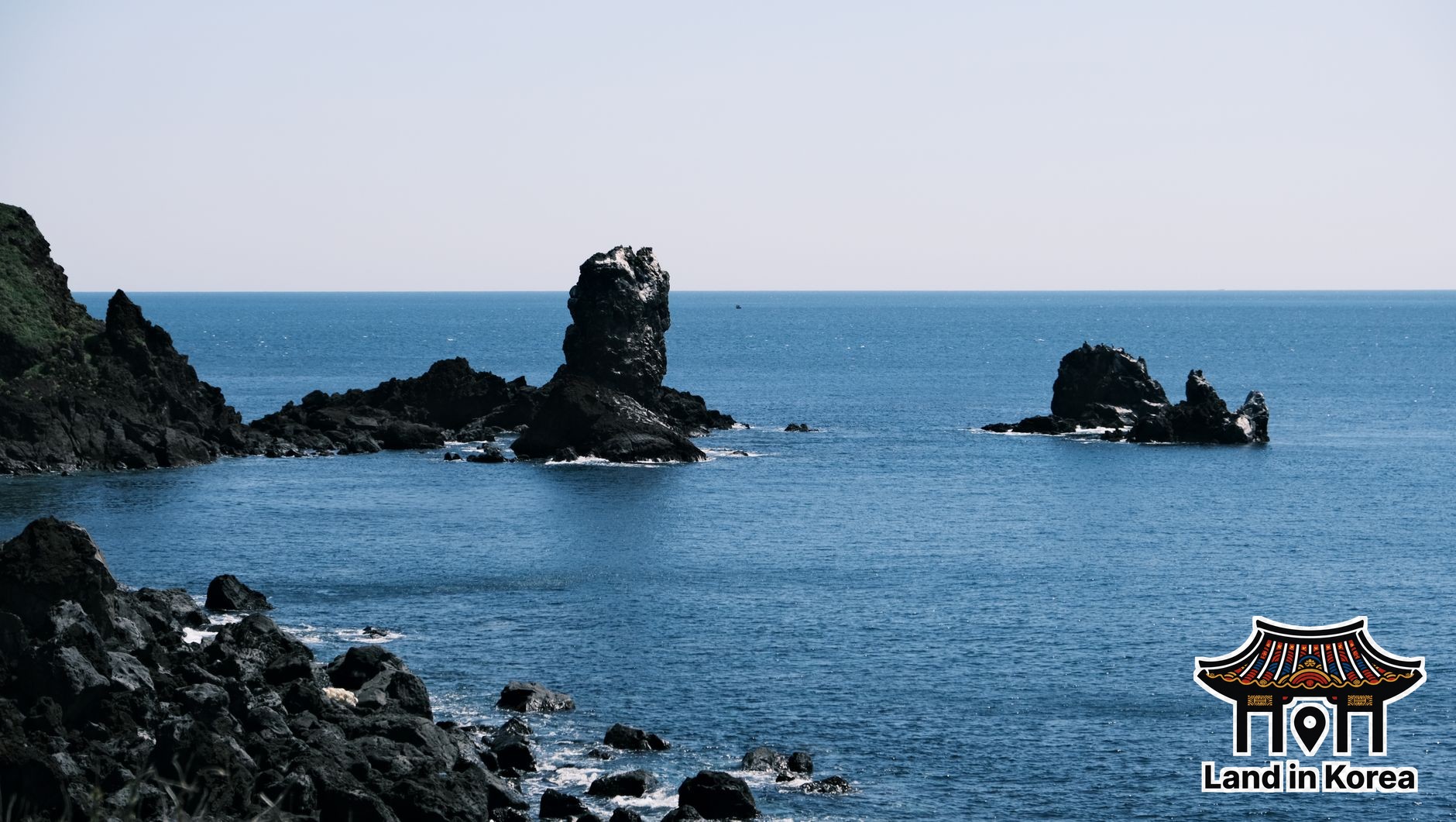
Dokdo sits in the Sea of Japan roughly 87 kilometers from Ulleungdo — the nearest inhabited Korean land — and about 216 kilometers from the South Korean mainland. There's no direct route from the mainland: every visitor reaches Dokdo by first getting to Ulleungdo, then taking a separate ferry from Ulleungdo's Dodong Port. If Dokdo is the goal, read our Ulleungdo guide first, since you'll be spending time there either way.
Administration, briefly
South Korea administers Dokdo as Dokdo-ri, within Ulleung-eup, Ulleung County, North Gyeongsang Province, and the islets are designated a nature reserve, which is the basis for the visitor restrictions below. Japan separately claims the islets (as part of Shimane Prefecture) and calls them Takeshima; this guide covers the practical side of visiting as South Korea administers and permits access to them, not the underlying dispute.
A landing isn't guaranteed
This is the detail that catches people off guard: getting on the boat doesn't mean you'll set foot on Dokdo. Landing is capped at roughly 70 visitors at a time, with one ferry a day, and docking depends on sea conditions — swells above roughly three to five meters make landing unsafe, and the boat simply circles instead. One older government source described landings happening as infrequently as once every 40 days, though that figure dates to 2001 and sits oddly next to more recent numbers: 2025 saw around 192,000 visitors, averaging roughly 500 a day, which only works if landings are happening far more often now than that old figure suggests. Treat the exact landing frequency as genuinely unclear from public sources, and go in expecting a real chance of a circle-only trip rather than a guaranteed landing.
What a visit actually involves
The round trip from Ulleungdo runs about four hours total, and if conditions allow a landing, you get roughly 30 minutes ashore — enough time to walk the pier, take photos, and see the handful of structures (a lighthouse, a helicopter pad, a police post) up close, not a half-day excursion. There's no town, no restaurant, no overnight stay; Dokdo has no permanent civilian residents, just a small rotating staff of lighthouse keepers, police, and administrative workers. Go in treating this as a bucket-list landing rather than a full-day activity, and the short visit won't feel like a letdown.
Booking and approval
Because of the nature reserve designation, civilian visits require advance approval through the relevant Korean authorities rather than simply buying a walk-up ticket — build this into your planning timeline rather than assuming you can decide the day before. As of late October 2026, the Dodong Port-to-Dokdo ferry itself runs roughly 60,000-70,000 won one-way in economy class (around 70,000+ won for business class), so budget roughly 120,000-140,000 won round-trip per person for the boat alone — separate from your Ulleungdo ferry and any guided package you book around it. Fares vary by operator (Daezer Ferry runs the route) and season, and government support that used to subsidize fares for some veterans/national merit recipients on one operator's boat was cut in 2026, so that discount may no longer apply — book through the Korea Shipping Association's official ferry reservation site or your operator directly, and confirm the current fare and any discount eligibility before paying.
When to go
Tourist sailings to Dokdo generally run in the warmer months, with winter largely closed off by weather — if a Dokdo landing specifically (not just the boat ride) matters to your trip, aim for spring through autumn and still build in flexible days around it, since even in-season sailings get cancelled on short notice.
The short version
- No direct route exists — every Dokdo trip starts with getting to Ulleungdo first, then a separate ferry from Dodong Port
- Landing is capped at roughly 70 visitors at a time, once a day, and only when sea conditions allow it
- A circle-only trip (no landing) is a real possibility — public sources disagree on exactly how often landings happen
- A landing gives you about 30 minutes ashore within a roughly 4-hour round trip — there's nothing resembling a town
- No permanent civilian residents — just lighthouse, police, and administrative staff
- Civilian visits need advance approval, not a walk-up ticket — plan ahead
- The Dodong-to-Dokdo ferry alone runs roughly 60,000-70,000 won one-way economy (~120,000-140,000 won round-trip), separate from your Ulleungdo ferry
- Sailings mostly run spring through autumn; winter weather largely closes the route
Official sources
This guide is checked against the Ministry of Foreign Affairs of the Republic of Korea and Korea Tourism Organization. Ferry fares above are a late-October-2026 range gathered from current operator and news reporting, not a single official price list. Visitor caps, approval procedures, fares, and sailing schedules change — confirm current details with your ferry operator (Daezer Ferry runs this route) or the Korea Shipping Association's official booking system before you book.
Frequently Asked Questions
Can I visit Dokdo directly from mainland Korea?
No. Every Dokdo trip departs from Ulleungdo's Dodong Port — there's no direct mainland-to-Dokdo ferry, so you'll need to reach Ulleungdo first.
How much does the Dokdo ferry cost?
As of late October 2026, the Dodong Port-to-Dokdo ferry runs roughly 60,000-70,000 won one-way in economy class, so budget around 120,000-140,000 won round-trip per person — separate from the ferry you already took to reach Ulleungdo. Fares vary by operator and season, so confirm the current price before booking.
Is landing on Dokdo guaranteed?
No. Landing depends on sea conditions and is capped at roughly 70 visitors at a time with one ferry a day. Rough swells mean the boat circles without landing — plan for this as a real possibility, not an edge case.
How long do you actually get on Dokdo?
If conditions allow a landing, about 30 minutes ashore, inside a round trip from Ulleungdo of roughly four hours total.
Does anyone live on Dokdo?
No permanent civilian residents. A small staff — lighthouse keepers, police, and administrative workers — rotates through, but there's no town or overnight accommodation.
When is the best time to visit Dokdo?
Spring through autumn, when tourist sailings generally run — winter weather largely closes the route. Even in season, build flexibility into your plan since sailings can be cancelled on short notice.