
Food Delivery Apps in Korea: Baemin, Coupang, Yogiyo
The short version
Menus are also mostly in Korean even when the app interface offers English, so a translation app pointed at the screen is part of normal ordering. Delivery fees and minimum order amounts are set per restaurant and shown before you check out, and choosing takeout (포장) instead of delivery often skips the fee entirely.
Even with an account, the address and phone step trips people up. Riders frequently call or text to confirm a drop-off, so a number you can actually answer matters more than the app's language setting, and the free-text delivery memo is where you write things like the building name, floor, or 'leave at the door. ' Hotels and guesthouses vary — some accept deliveries at the front desk, others don't, so ask before ordering. Disposable cutlery is no longer included by default; you have to tick the option for chopsticks and spoons.
The three apps aren't interchangeable
Baedal Minjok (Baemin) is the largest of the three and the most distinctly Korean-coded in its branding and restaurant selection, making it the default most locals reach for first. Coupang Eats is tied into Coupang's broader e-commerce ecosystem, so existing Coupang members sometimes get delivery perks bundled with their membership rather than as a standalone cost. Yogiyo is the smaller third player, competing mainly on restaurant selection and promotions in specific neighborhoods. In practice, the restaurants available and the fees charged can differ between all three for the exact same address, so it's worth having more than one installed rather than committing to whichever app you set up first.
Tipping isn't part of this
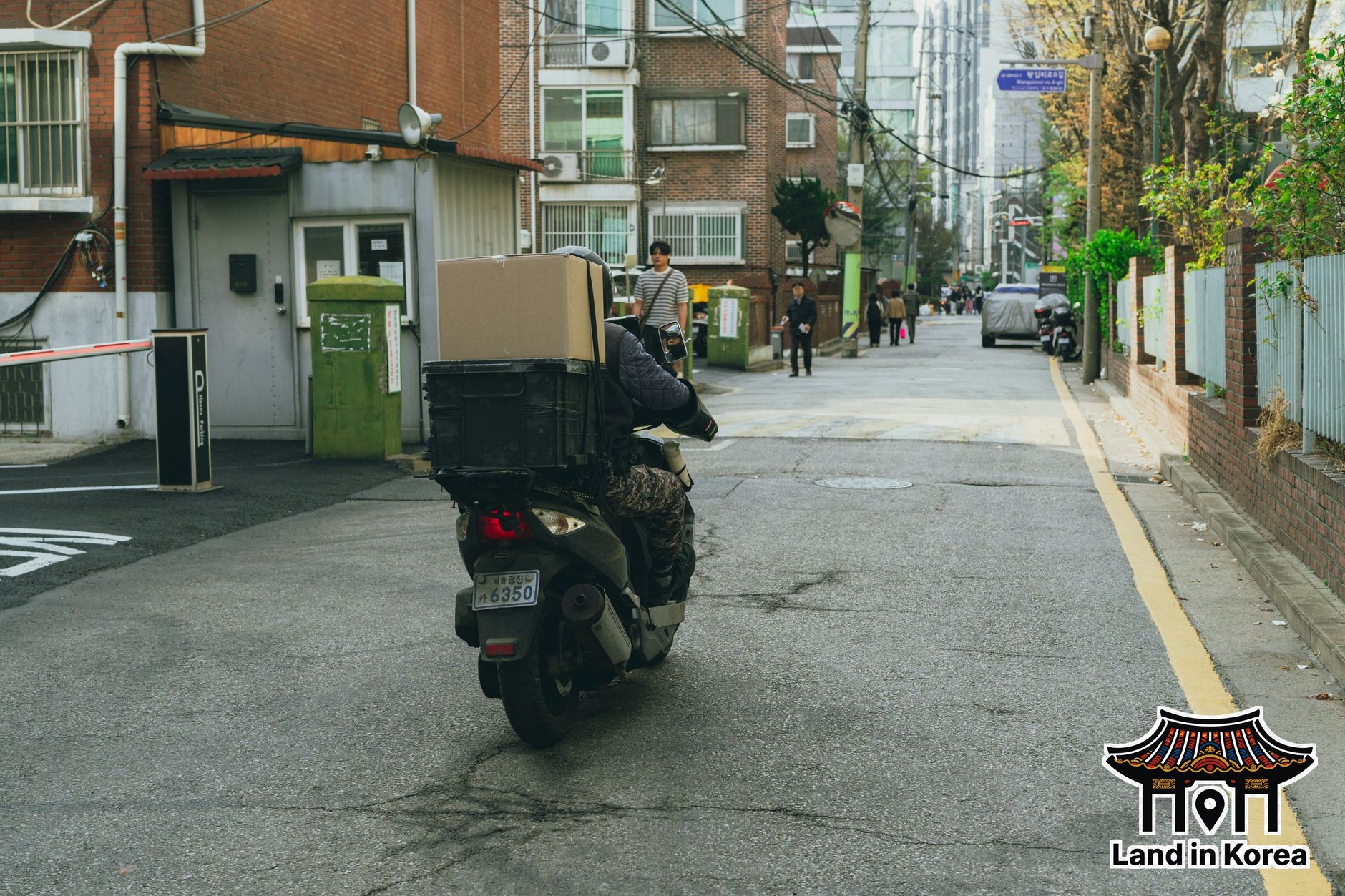
Delivery riders in Korea aren't tipped, in line with Korea's broader no-tipping culture — the delivery fee shown at checkout is the full cost, not a base price you're expected to round up. What does matter for a smooth delivery is the memo field: a short, clear note on gate codes, floor, or where exactly to leave the bag does more for a good experience than anything related to payment.
Minimum orders, surge fees, and bad-weather pricing
Every restaurant sets its own minimum order amount on these apps, shown clearly before checkout, and ordering below it simply isn't possible — you'll need to add an item or switch restaurants rather than pay a shortfall fee. Delivery fees themselves aren't fixed either: they commonly rise during rain, snow, or extreme heat, and during peak lunch and dinner rushes, since the apps use dynamic pricing to pull in more riders when conditions make the job harder or demand spikes. None of this is hidden — the fee updates live on screen before you confirm the order — but it explains why the same restaurant's delivery fee can look different ordering at 7pm on a rainy Friday versus a quiet Tuesday afternoon.
No-contact delivery is the default, not an option to request
Since the pandemic, contactless delivery (비대면 배달) has become the standard assumption rather than something you have to ask for — riders leave the bag at the door, send a photo or notification through the app, and don't wait for you to answer. If you'd actually prefer to meet the rider in person, most apps have a separate "hand it to me directly" toggle in the delivery instructions, which is the one you need to switch on deliberately now, since the default has flipped from how it used to work.
Order tracking is more precise than most countries' apps
All three major apps show a live map of the rider's position from kitchen to door, along with an updating estimated arrival time, which tends to be more reliable than the equivalent feature in delivery apps elsewhere. It's worth keeping an eye on in the last few minutes specifically, since riders in Korea often move fast and the window between "nearby" and "arrived" can be under a minute.
Related guides
- Convenience stores as a delivery-app alternative
- You'll need data to use these apps
- Payment methods that actually work
Official sources
This guide is checked against Korea Tourism Organization. Prices, hours, and procedures change — confirm time-sensitive details there before you rely on them.
Frequently Asked Questions
What's the most common first-timer mistake with food delivery apps in korea: why signing up is harder than ordering?
Korea's delivery ecosystem runs on a few big apps — Baemin, Coupang Eats, and Yogiyo — and the food itself arrives fast and cheap by global standards.
What should I know before I go?
The hard part is account setup: most apps expect a Korean mobile number for verification, and payment usually flows through a Korean-issued card or a domestic wallet like Kakao Pay or Naver Pay, though foreign cards work in some cases.
Any quick tip to remember?
Delivery to outdoor spots like Han River parks is a local ritual, and it works by choosing a park-zone address and meeting the rider at a designated pickup point rather than at your picnic mat.