
Renting a Car in Korea: When It's Worth It, When It's Not
The short version
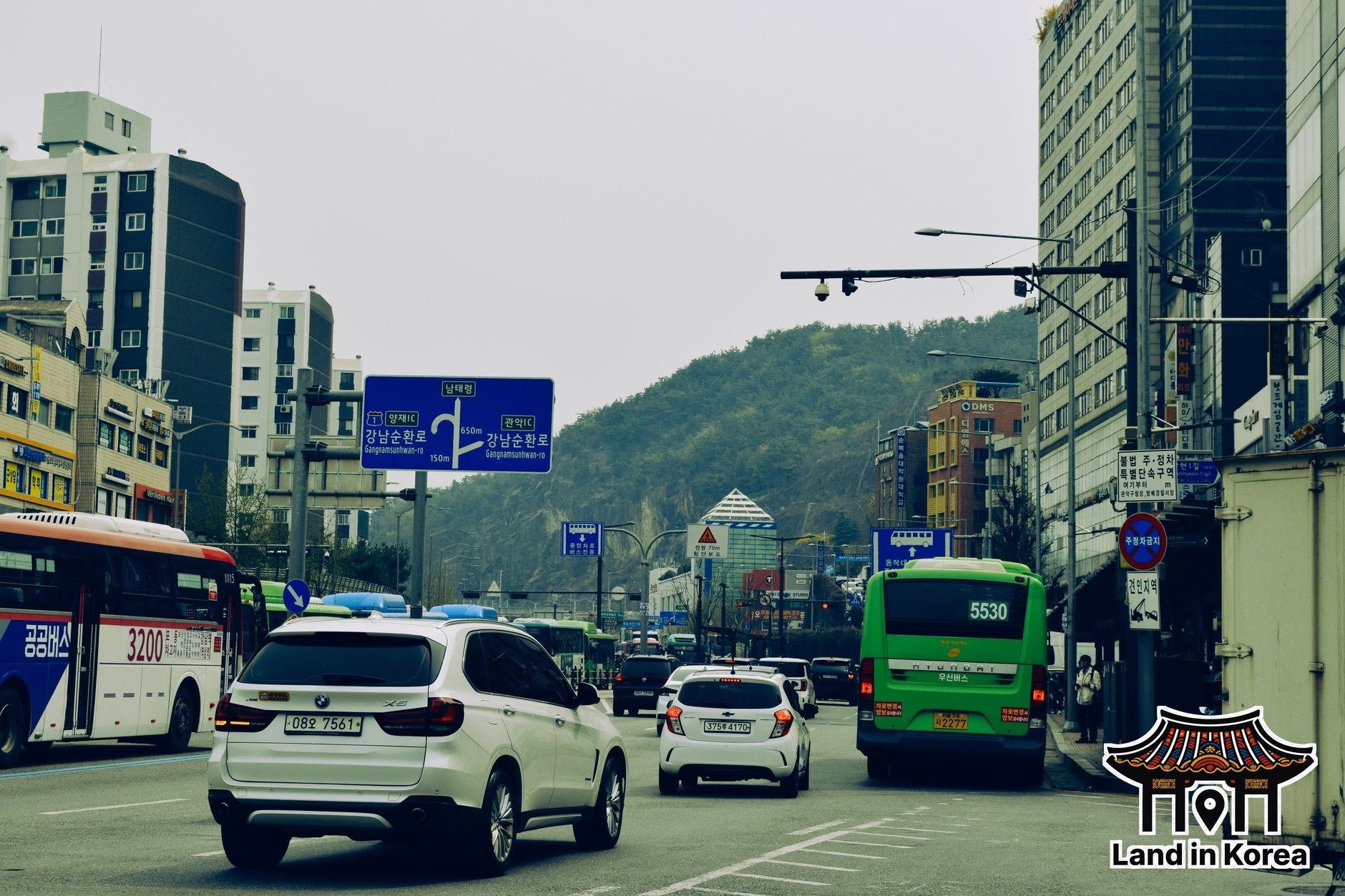
Seoul is the opposite case: traffic is heavy, street parking is essentially nonexistent, paid lots are expensive, and the subway will beat you door-to-door almost every time. A common compromise is taking the KTX or a bus to a regional hub and renting a car there for a day or two.
To rent, most short-term visitors need an International Driving Permit issued in their home country before departure, presented together with the original home license and a passport — an IDP alone isn't valid, and not every country's license is covered by the conventions Korea recognizes. Rental companies also set minimum age and minimum license-holding requirements, and a credit card in the driver's name is usually expected. Rental cars normally come with a Hi-pass toll transponder so expressway tolls are billed automatically, and most gas stations offer both full-service and cheaper self-service pumps.
Automatic is the default, not an upgrade
Nearly every rental car in Korea is automatic transmission — it's the standard fleet, not a pricier option the way it can be in parts of Europe. If you specifically want a manual, you'll need to request it ahead of time and accept a much smaller selection, since most agencies simply don't stock many stick-shift cars anymore.
Insurance tiers at the counter
Rental desks typically offer a basic insurance package included in the quoted price, plus one or two higher tiers that reduce or eliminate your out-of-pocket liability (excess) if the car is damaged. The basic tier usually leaves you responsible for a real amount toward any damage; the upgraded tiers cost more per day but cap or remove that exposure. Agents will push the upgrade at the counter — it's worth a few minutes' thought rather than an automatic yes or no, especially if your own credit card already includes rental car coverage worth checking before you fly.
One-way rentals cost more, but solve real routing problems
Picking a car up in one city and dropping it off in another — Seoul to a Busan or Jeju airport, for example — is generally possible but comes with a one-way fee on top of the normal rate, since the company has to get the car back. For an itinerary that's genuinely point-to-point rather than a loop back to where you started, that fee is usually still cheaper than backtracking just to return the car, but confirm the exact drop-off location is supported before booking — not every branch accepts every other branch's returns.
Parking is the hidden cost nobody budgets for
Street parking is rare in Korean cities and often restricted to residents with a permit, so the default is a paid lot — either a staffed lot with an attendant, or an unstaffed one that reads your plate on entry and charges on exit, sometimes requiring a Korean-registered payment method. Rates climb fast in dense commercial districts like Myeongdong or Gangnam, while residential neighborhoods and smaller cities are far cheaper. Hotels and larger attractions usually have their own lot with validated or flat-rate parking, which is worth checking before you circle a block looking for street parking that likely doesn't exist. Return the car with a full tank — rental agreements almost universally charge a premium top-up fee if you don't, well above the pump price.
Tolls still work without your own Hi-pass
Even if a rental car's Hi-pass transponder isn't active or the car doesn't have one, Korean expressway tolls still function — unpaid toll-gate cameras photograph the plate, and the rental company bills you afterward, usually with a small handling fee added on top of the toll itself. It's not a way to dodge tolls, just a fallback that means a missing or malfunctioning transponder won't get you stuck at a gate. Most rental cars also come with a built-in navigation system already set to Korean map data, which is a reasonable backup if your phone's battery or data runs out mid-drive.
Related guides
Official sources
This guide is checked against Korea Tourism Organization. Prices, hours, and procedures change — confirm time-sensitive details there before you rely on them.
Frequently Asked Questions
What's the most common first-timer mistake with renting a car in korea: when it's smart, when it's a waste, and what the rental desk will ask for?
Driving is a real upgrade for some trips and a liability for others.
What should I know before I go?
Jeju, the Gangwon coast, rural temples, and small-town markets are much easier with a car because bus frequencies drop off sharply outside cities.
Any quick tip to remember?
Enforcement is strict and automated: speed cameras are everywhere, drink-driving limits are low with severe penalties, and Korean navigation apps like KakaoNavi, Naver Map, and T-map are the standard tools, since Google Maps still can't give proper driving directions in Korea.